ORIGINAL
Psychometric Properties of an Artificial Intelligence Addiction Scale (AIAS) in University Students
Wilter C. Morales-García1* *, Liset Z. Sairitupa-Sanchez2, Mardel Morales-García3* *
1Facultad de Teología, Universidad Peruana Unión, Lima, Perú.
2Escuela Profesional de Psicología, Facultad de Ciencias de la Salud, Universidad Peruana Unión, Lima, Peru.
3Unidad de Salud, Escuela de posgrado, Universidad Peruana Unión, Lima, Perú.
Citation
Morales-García, W. C., Sairitupa-Sanchez, L. Z., & Morales-García, M. (2023). Psychometric Properties of an Artificial Intelligence Addiction Scale (AIAS) in University Students. Interdisciplinary Advances in Health, 1, 1. https://doi.org/10.69653/iah20231
Submitted: 10-06-2023
Accepted: 19-12-2023
Published: 20-12-2023
*Correspondence
Facultad de Teología, Universidad Peruana Unión, Km 19, Carretera Central, Lima 15033, Lima, Perú.
Abstract
Background: Addiction is a multifaceted disorder that has evolved to include behaviors related to excessive use of digital technologies. In the university context, dependence on artificial intelligence (AI) systems raises significant concerns about its impact on students’ mental health and academic performance. While addiction to specific technologies, such as smartphones, has been studied, addiction to AI is an emerging phenomenon that requires proper and contextualized assessment.
Objective: The objective of this study was to adapt and evaluate the psychometric properties of an artificial intelligence addiction scale in university students.
Methods: An instrumental study was conducted with a sample of 275 university students aged between 18 and 45 years (M = 20.51, SD = 4.20). The adaptation of the Online Gaming Addiction Questionnaire to the context of AI followed a rigorous process of translation and cultural validation. A confirmatory factor analysis (CFA) was conducted to evaluate the unidimensional structure of the scale, along with reliability analyses and measurement invariance tests by gender.
Results: The CFA indicated an adequate fit for the one-factor model: χ² = 84.130, df = 35, CFI = 0.96, TLI = 0.94, RMSEA = 0.07, SRMR = 0.04. Reliability coefficients were high, with a Cronbach’s alpha of 0.94 and a McDonald’s omega of 0.93. Measurement invariance by gender was confirmed through hierarchical models, with differences in CFI less than 0.010, indicating that the scale measures consistently across males and females.
Conclusions: The adaptation and evaluation of the AI Addiction Scale (AIAS) demonstrate that this tool is valid and reliable for measuring AI addiction in university students. The findings suggest that the AIAS can be effectively used in future research and in the development of interventions to address this emerging addictive behavior, contributing to the understanding and management of technological addiction in educational contexts.
Keywords
Artificial Intelligence, Addiction, Psychometric Properties, University Students, Scale Validation.
Introduction
Addiction is a multifaceted disorder that has been the subject of numerous studies and scientific debates over the years. Traditionally, this term has been associated with chemical substances, such as alcohol and illicit drugs, but with the advent of the digital age, the concept has expanded to include various forms of behavioral addictions, including technology addiction (Griffiths, 2017; K. Young, 2009). Addiction to current technologies, recognized in the literature as a form of behavioral addiction, refers to the compulsive use of digital devices that can have negative repercussions on individuals’ mental health and academic performance (Cash et al., 2012). Certain characteristics of digital technologies, such as interactivity, immediacy of communication, and unlimited access to information, can foster usage patterns that resemble addictive behaviors (Kardefelt-Winther, 2014). In this context, “technological addiction” manifests through a variety of behaviors, including the compulsion to check devices, an excessive need to stay connected, and difficulties disengaging from digital interfaces (Griffiths, 2010; K. S. Young, 1998).
University students are particularly susceptible to this form of addiction, given their intensive and constant use of technologies that employ artificial intelligence, such as adaptive learning platforms and virtual personal assistants (Kuss & Griffiths, 2017). The growing dependence on these systems raises significant questions about the long-term consequences for students’ concentration, mental health, and social skills (Brand et al., 2014). Brain structures such as the orbitofrontal cortex, dorsal striatum, basolateral amygdala, hippocampus, and insula are important in the anticipation phase, where cravings intensify the risk of addiction. Neuroadaptations in these areas, beginning with changes in the mesolimbic dopamine system and culminating in dysregulation of the prefrontal cortex and extended amygdala, increase vulnerability to the development and maintenance of addiction (Koob & Volkow, 2010). Smartphone addiction, a specific manifestation of technological addiction, has intensified due to the global ubiquity of these devices and their constant internet access, enhancing their capacity to induce addictive behaviors (Panova & Carbonell, 2018). Although smartphone addiction is not yet recognized in official diagnostic manuals like the DSM-5 or ICD-11, there is growing concern about how these devices affect individuals’ daily lives, manifesting addiction symptoms such as separation anxiety and compulsive use, even in the face of negative consequences. Family functioning is a significantly negative predictor of mobile phone addiction in university students, with loneliness mediating this relationship. Additionally, the ability to be alone moderates the effects of family functioning on loneliness and mobile addiction, being more pronounced in students with low capacity to be alone (Li et al., 2023). Students’ ability to tolerate stress, differentiate from others, and regulate their emotions also directly influences the tendency towards addiction, mediated by resilience (Dezhkam et al., 2023). Mobile addiction is strongly associated with suicidal ideation through the mediation of depression, although this relationship could be mitigated by online social support (Hu et al., 2022).
Addiction, traditionally associated with chemical substances like drugs and alcohol, has evolved in the digital age to include behaviors related to excessive use of digital technologies and platforms (Grant et al., 2010). The prevalence of connected devices and the accessibility of AI-based services have introduced new forms of human interactions where the line between use and abuse can be blurred, with significant psychological consequences (Potenza, 2006). The growing use of smart devices and the omnipresence of digital technology have led to the emergence of new forms of addiction, such as internet addiction and, more recently, AI addiction (Amjad et al., 2020). This type of addiction is characterized by an excessive and pathological dependence on AI technologies, which can negatively affect mental health, academic performance, and interpersonal relationships (Chen & Zhang, 2023).
AI addiction is defined as compulsive and excessive interaction with AI-based technologies that interferes negatively with daily life, affecting an individual’s emotional, social, and professional well-being. This behavior is characterized by an increasing need to use these technologies, difficulty in reducing their use, and the presence of withdrawal symptoms and conflicts in personal and work environments when access to AI is restricted.
AI has been significantly integrated into educational tools and digital platforms, which can enhance learning opportunities and pose addiction risks (Abdelmagid et al., 2024). Although most students are familiar with AI, many require additional training in this field, suggesting a significant relationship between knowledge of AI and employment opportunities (Ruiz-Talavera et al., 2023). AI addiction may be influenced by factors such as self-efficacy in managing technology and attitudes toward AI, highlighting the need for educational and psychological interventions. Understanding the psychological and behavioral dimensions contributing to this form of addiction allows for recommendations for educational and mental health policies in university settings (Morales-García et al., 2024a).
Nursing students with high levels of smart device addiction showed a more acute perception of AI, suggesting that familiarity and dependence on digital technologies can influence how students perceive and relate to AI (Farghaly Abdelaliem et al., 2023). In the era of digitalization and the omnipresence of technology, a new concern arises in the field of addictions: AI addiction. Although the concept of addiction has been widely studied in relation to substances and behaviors, AI addiction represents a relatively new and unexplored field. This phenomenon is particularly relevant in the context of university students, who are in constant interaction with advanced technologies in their academic and social activities (Van Rooij & Prause, 2014). AI addiction could negatively impact students’ mental health, affecting their sleep, concentration, and academic performance (Andreassen et al., 2016; Samaha & Hawi, 2016). Students with more favorable learning environments and positive beliefs about the value and usefulness of AI showed a greater intention to learn about AI (Wang et al., 2023). Therefore, continuous exposure to and use of AI in academic settings can significantly influence students’ motivation to learn and adapt to these technologies. In conclusion, AI addiction in university students is an emerging concern that reflects the evolution of addictions in the digital age. Understanding and addressing this phenomenon requires a multidisciplinary approach that considers the psychological, educational, and technological factors involved (Zhang, 2023; King et al., 2012).
The Online Role-Playing Games Addiction Scale, validated in a study on players of these games, consists of 10 items distributed across five aspects: Salience, Mood Modification, Tolerance, Conflicts, and Time Constraints. Salience assesses the importance of gaming in the player’s life and its impact on essential daily activities. Mood Modification measures emotional changes related to gaming. Tolerance refers to the need to increase gaming time to achieve the same sensations. Conflicts evaluate interpersonal and performance problems caused by gaming. Time Constraints assess the difficulty in controlling the time spent on gaming. This scale is a reliable tool for identifying addictive behavior symptoms in MMORPG players (Blinka & Smahel, 2007).
In the Peruvian context, the integration of AI in areas such as education, entertainment, and work has grown exponentially, highlighting the need to study possible addictive behaviors associated with this emerging technology. The Online Role-Playing Games Addiction Scale provides a robust framework for evaluating addiction in contexts of intense digital interaction but has not yet been adapted to measure AI addiction. Translating and validating this scale for the Peruvian context will address the country’s cultural and technological particularities, ensuring that the tool is accurate and relevant for the local population. In Peru, sociocultural diversity and varied access to technology present a unique scenario that influences how individuals interact with AI. Moreover, the growing dependence on AI technologies in sectors such as education and entertainment requires specific evaluation to better understand the potential addiction risks. Adapting the scale to an AI context will effectively detect symptoms of addictive behavior, facilitating early interventions and designing appropriate prevention strategies. Therefore, the objective of this research is to adapt and evaluate the psychometric properties of an AI addiction scale in university students.
Methods
Design and Participants
This instrumental study (Ato et al., 2013) used convenience sampling for participant selection. The inclusion criteria were as follows: a) university students between their first and tenth semesters of study, and b) those who use artificial intelligence as an integral part of their academic training, with at least six months of experience using AI tools and a daily usage of at least four hours.
To determine the required sample size, an electronic sample size calculator was used (Soper, 2024), considering several critical factors: the number of observed and latent variables in the proposed model, the expected effect size (λ=0.10), the established statistical significance level (α=0.05), and the desired statistical power (1−β=0.90). Although the minimum required sample was calculated at 199 participants, a total of 275 university students aged 18 to 45 years (M=20.51, SD=4.20) were recruited. The sample was balanced in terms of gender, with 50.5% female participants and 49.5% male participants. Most students belonged to the School of Medicine (35.6%), were in their second year (23.6%), and were from the coastal region (57.8%) (Table 1).
Instruments
Game Addiction: The “Online Gaming Addiction Questionnaire” was used to measure addiction to massively multiplayer online role-playing games (MMORPGs) (Blinka & Smahel, 2007). This questionnaire consists of 10 items that evaluate Salience, Mood Modification, Tolerance, Conflicts, and Time Constraints, based on the DSM IV criteria for general addiction, specifically adapted for MMORPGs. The measurement scale is a 4-point Likert scale, with responses: (1) never, (2) rarely, (3) often, and (4) very often. Reliability, measured by Cronbach’s alpha, is above 0.90, indicating high internal consistency.
The Spanish translation of the “Online Gaming Addiction Questionnaire” followed an established cultural adaptation method to ensure linguistic and conceptual fidelity to the original instrument. This process included the following stages:
1. Two bilingual Spanish translators, both native speakers, independently translated the questionnaire into Spanish. Both versions were compared, and a consensus initial version was created.
2. This Spanish version was then back-translated into English by two native English speakers from the United States who were fluent in Spanish but unfamiliar with the questionnaire. This step aimed to verify that the original meaning was preserved in the translation.
3. A committee of experts, consisting of two educators and a researcher, reviewed the translated Spanish version along with the new English versions to develop a preliminary Spanish version of the questionnaire.
4. After deliberations, six items were reworded to align with the context of Artificial Intelligence (AI).
5. This preliminary version was administered to a focus group of 11 participants to assess comprehension and readability. Linguistic adjustments were made based on feedback, culminating in the final Spanish version of the instrument, named the Artificial Intelligence Addiction Scale (AIAS), presented in table 2.
|
Table 1. Sociodemographic Characteristics |
|||
|
Characteristics |
n |
% |
|
|
Gender |
Female |
139 |
50.5 |
|
Male |
136 |
49.5 |
|
|
School |
Nursing |
30 |
10.9 |
|
Medicine |
98 |
35.6 |
|
|
Nutrition |
69 |
25.1 |
|
|
Psychology |
78 |
28.4 |
|
|
Semester |
1 |
56 |
20.4 |
|
2 |
65 |
23.6 |
|
|
3 |
13 |
4.7 |
|
|
4 |
44 |
16.0 |
|
|
5 |
8 |
2.9 |
|
|
6 |
36 |
13.1 |
|
|
7 |
6 |
2.2 |
|
|
8 |
19 |
6.9 |
|
|
9 |
5 |
1.8 |
|
|
10 |
23 |
8.4 |
|
|
Place of Origin |
Coast |
159 |
57.8 |
|
Jungle |
62 |
22.5 |
|
|
Highlands |
54 |
19.6 |
|
Procedure
The study involving the questionnaire was conducted under strict ethical principles, with approval from the Ethics Committee of Universidad Peruana Unión, identified with code CEUPeU-0225. The importance of privacy and confidentiality of participant data was emphasized, ensuring informed consent before administering the questionnaire. The administration of this tool was carried out in person at two university institutions in Peru, highlighting the voluntary and anonymous nature of participation. This methodological approach not only promotes the accuracy and reliability of the collected data but also protects the rights of participants throughout the research process.
Data Analysis
Initially, a descriptive analysis of the AIAS items was conducted, considering the mean, standard deviation, skewness, and kurtosis, as well as the corrected item-total correlation analysis. Skewness (g1) and kurtosis (g2) values were considered acceptable within the range of ±1.5 (George & Mallery, 2003). The corrected item-total correlation analysis was used to exclude items with r(i-tc) ≤ 0.2 (Kline, 2016).
Subsequently, a confirmatory factor analysis (CFA) was performed on the unidimensional structure of the scale, using the MLR estimation method, recommended for data that do not meet the normality assumption (Muthen & Muthen, 2017). The parameters used to evaluate model fit included chi-square (χ²), the Comparative Fit Index (CFI), and the Tucker-Lewis Index (TLI), with suggested values of ≥0.90, and the Root Mean Square Error of Approximation (RMSEA) and the Standardized Root Mean Square Residual (SRMR) with values of ≤0.08 (Kline, 2016; Schumacker & Lomax, 2016). The reliability of the scale was determined by Cronbach›s alpha and McDonald›s omega, with values above 0.70, indicating adequate internal consistency (McDonald, 1999).
To examine measurement invariance (MI) of the scale by gender, a multi-group confirmatory factor analysis was conducted. Four levels of invariance were considered: configural, metric, scalar, and strict, establishing invariance with differences in ΔCFI less than 0.010 (Chen, 2007). An explanatory model was also developed through structural equation modeling, applying the same fit criteria and the MLR estimator.
Statistical analyses were performed using RStudio (Allaire, 2018) with version 4.1.1 of R (R Foundation for Statistical Computing, Vienna, Austria; http://www.R-project.org). The “lavaan” package was used for confirmatory factor analysis and structural equation modeling (Rosseel, 2012), and measurement invariance analysis was facilitated by the “semTools” package (Jorgensen et al., 2022).
Results
Descriptive Statistics of the Items
In the analysis of the results (Table 2), it was observed that the item with the highest mean is item 10 (M = 2.17, SD = 0.99), and the item with the lowest mean is item 7 (M = 1.90, SD = 0.94). Regarding skewness (g1) and kurtosis (g2), all items have values within the normal range of ±1.5, suggesting an approximately normal distribution. Specifically, skewness ranges from 0.35 (item 5) to 0.75 (item 7), while kurtosis ranges from -0.93 (item 10) to -0.44 (item 7). Concerning the corrected item-total correlations (r(i-tc)), all items have values above the acceptable threshold of 0.30, with values ranging from 0.67 (item 1) to 0.80 (item 3). This indicates that all items contribute adequately to the scale, and no items need to be removed.
|
Table 2. Descriptive Statistics |
||||||
|
English |
Spanish |
M |
sd |
g1 |
g2 |
r(i-tc) |
|
Do you ever neglect your needs (like eating or sleeping) because of online gaming? |
¿Alguna vez descuidas tus necesidades (como comer o dormir) debido a la interacción con la Inteligencia Artificial? |
2.11 |
0.95 |
0.41 |
-0.83 |
0.67 |
|
Do you ever imagine you are in the game when you are not? |
¿Alguna vez te imaginas que estás conversando o interactuando con la Inteligencia Artificial cuando no lo estás? |
1.92 |
0.94 |
0.61 |
-0.73 |
0.74 |
|
Do you feel unsettled or irritated when you cannot be in the game? |
¿Te sientes inquieto o irritado cuando no puedes interactuar con la Inteligencia Artificial? |
1.94 |
0.94 |
0.72 |
-0.45 |
0.8 |
|
Do you feel happier and more cheerful when you finally get to the game? |
¿Te sientes más feliz y animado cuando finalmente logras interactuar con la Inteligencia Artificial? |
2.08 |
0.91 |
0.38 |
-0.8 |
0.74 |
|
Do you feel like you are spending ever more time in the online game? |
¿Sientes que estás dedicando cada vez más tiempo a la interacción con la Inteligencia Artificial? |
2.1 |
0.93 |
0.35 |
-0.87 |
0.76 |
|
Do you ever catch yourself playing the game without being really interested? |
¿Alguna vez te encuentras interactuando con la Inteligencia Artificial sin estar realmente interesado? |
2.09 |
0.88 |
0.37 |
-0.69 |
0.75 |
|
Do you ever argue with your close ones (family, friends, partners) because of the time you spent in the game? |
¿Alguna vez discutes con tus seres queridos (familia, amigos, pareja) debido al tiempo que pasas interactuando con la Inteligencia Artificial? |
1.9 |
0.94 |
0.75 |
-0.44 |
0.78 |
|
Do your family, friends, job, and/or hobbies suffer because of the time you spend in online gaming? |
¿Tu familia, amigos, trabajo y/o pasatiempos se ven afectados debido al tiempo que pasas interactuando con la Inteligencia Artificial? |
1.97 |
0.96 |
0.62 |
-0.69 |
0.78 |
|
Have you ever been unsuccessful in trying to limit time spent in the game? |
¿Alguna vez has intentado sin éxito limitar el tiempo que pasas interactuando con la Inteligencia Artificial? |
2.1 |
0.96 |
0.42 |
-0.85 |
0.78 |
|
Does it happen to you that you stay in the game for a longer time than originally planned? |
¿Te sucede que permaneces interactuando con la Inteligencia Artificial más tiempo del que originalmente habías planeado? |
2.17 |
0.99 |
0.37 |
-0.93 |
0.73 |
Confirmatory Factor Analysis and Reliability
A confirmatory factor analysis (CFA) was conducted following the guidelines established by Blinka and Smahel (2007). The obtained goodness-of-fit indices indicated an adequate fit: χ² = 84.130, df = 35, p = 0.000, CFI = 0.96, TLI = 0.94, RMSEA = 0.07 (90% CI: 0.06 - 0.09), and SRMR = 0.04. All factor loadings were significant, exceeding the critical threshold of 0.50, underscoring the construct validity of the scale used to measure artificial intelligence addiction. These findings robustly confirm the unidimensional factorial structure of the scale, demonstrating its relevance for assessing AI addiction. Regarding the internal consistency analysis of the scale, highly positive results were observed. The reliability coefficients, including Cronbach’s alpha (α = 0.94) and McDonald’s omega (ω = 0.93), recorded adequate values.
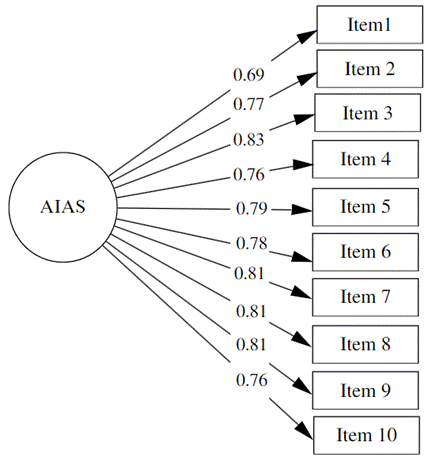
Figure 1. Theoretical Model
Invariance
A sequence of increasingly restrictive hierarchical variance models was proposed to evaluate the invariance of the Artificial Intelligence Addiction Scale (AIAS) by gender. First, configurational invariance (reference model) was assessed, followed by metric invariance (equality of factor loadings), scalar invariance (equality of factor loadings and intercepts), and finally strict invariance (equality of factor loadings, intercepts, and residual variances). A modeling strategy was employed using differences in the Comparative Fit Index (CFI), where values less than < 0.010 indicate model invariance between groups (Chen, 2007). The results obtained were as follows: for configurational invariance, the CFI was 0.945; for metric invariance, the CFI was 0.940 with a ΔCFI of 0.005; for scalar invariance, the CFI was 0.932 with a ΔCFI of 0.008; and for strict invariance, the CFI was 0.930 with a ΔCFI of 0.002. These results indicate that the AIAS presents invariance between genders, suggesting that the scale consistently measures artificial intelligence addiction in both men and women, allowing for valid comparisons between these groups.
|
Table 3. Invariance by Gender |
||||||||
|
Invariance |
χ2 |
df |
p |
TLI |
RMSEA |
SRMR |
CFI |
ΔCFI |
|
Configural |
134.355 |
70 |
<.001 |
0.930 |
0.080 |
0.043 |
0.945 |
|
|
Metric |
149.929 |
79 |
<.001 |
0.931 |
0.079 |
0.059 |
0.940 |
0.005 |
|
Scalar |
167.832 |
88 |
<.001 |
0.931 |
0.080 |
0.063 |
0.932 |
0.008 |
|
Strict |
180.77 |
98 |
<.001 |
0.935 |
0.077 |
0.061 |
0.930 |
0.002 |
Discussion
Addiction to digital technologies, including artificial intelligence (AI), is an emerging phenomenon that negatively affects the mental health and academic performance of university students. These students, due to their intensive use of AI-based technologies, are particularly vulnerable to developing addictive behaviors. AI addiction manifests through the compulsive need to interact with AI technologies, difficulty in reducing their use, and withdrawal symptoms. This research proposes adapting and validating an existing scale, originally designed to measure video game addiction, to evaluate AI addiction in the Peruvian context. The objective is to translate and evaluate the psychometric properties of this scale in university students, ensuring its relevance and accuracy in detecting AI addiction symptoms. This will allow for early interventions and appropriate prevention strategies for this population.
The confirmatory factor analysis (CFA) conducted following the guidelines of Blinka and Smahel (2007) provided significant results in validating a scale to measure AI addiction in university students. The goodness-of-fit indices obtained were: χ² = 84.130, df = 35, p = 0.000, CFI = 0.96, TLI = 0.94, RMSEA = 0.07 (90% CI: 0.06 - 0.09), and SRMR = 0.04. These values indicate an adequate model fit, underscoring the construct validity of the scale used. Our findings align with previous studies on technological addiction and its impact on students’ mental health and academic performance. For example, Widyanto & Griffiths (2006) and Kuss & Griffiths (2012) extensively documented technology addiction and its manifestations, highlighting the importance of similar fit indices for validating scales in technological contexts. However, our research differs by focusing specifically on AI addiction, a less explored area in current literature. Significant factor loadings, all above the critical threshold of 0.50, confirm the unidimensional structure of the scale. This finding supports the hypothesis that AI addiction can be assessed as a singular construct. Specifically, the validation of the unidimensional structure suggests that compulsive behaviors related to AI share a common neuropsychological basis, similar to other forms of technological addiction.
Compared to previous studies, our findings on the reliability of the Artificial Intelligence Addiction Scale (AIAS) in university students demonstrate remarkably high internal consistency. The reliability coefficients, such as Cronbach’s alpha (α = 0.94) and McDonald’s omega (ω = 0.93), indicate strong internal cohesion among the scale items. The results obtained demonstrate that the scale is a reliable instrument for measuring AI addiction among university students. The high internal consistency observed suggests that the scale items are well-aligned and effectively measure the construct of AI addiction. This level of reliability is crucial to ensure that the assessments are accurate and reproducible.
In this study, a sequence of hierarchical invariance models was employed to evaluate the AI Addiction Scale (AIAS) by gender. The evaluation began with configurational invariance, followed by metric, scalar, and finally strict invariance. These models allow for verifying whether the scale measures consistently between different groups. A detailed analysis of the results reveals that the AIAS is a reliable tool for measuring AI addiction uniformly across genders. This finding is important because it ensures that observed differences in addiction levels are not due to measurement biases but reflect real differences in addiction experiences between men and women.
Implications
The findings of this study highlight the growing concern about AI addiction among university students, a phenomenon that can have significant consequences for professional practice in educational and mental health fields. Implementing awareness and prevention programs in universities is crucial. Mental health professionals and educators should be trained to identify signs of AI addiction and offer early interventions that include time management strategies and self-regulation skills. Additionally, universities should integrate modules on healthy technology use into their curricula, providing students with tools to balance the use of AI with other academic and social activities.
Furthermore, the results of this study emphasize the need to develop policies that regulate the use of AI-based technologies in educational settings. Policymakers and educational leaders should consider creating guidelines that limit digital device usage in academic settings and promote balanced and healthy technology use. Additionally, it is essential to fund further research and training programs for education and mental health professionals, ensuring they are equipped to address challenges related to AI addiction.
Moreover, this study expands the understanding of technology addiction by focusing on AI addiction, a relatively new and unexplored field. The findings suggest that AI addiction shares characteristics with other forms of behavioral addiction, such as salience, mood modification, and interpersonal conflicts. This study also underscores the importance of considering contextual and cultural factors when adapting and validating addiction measurement instruments. Validating the AI Addiction Scale (AIAS) in a Peruvian university context provides a solid framework for future research in different cultural settings.
Limitations
The cross-sectional design prevents establishing causal relationships between variables. Future research should use longitudinal designs to better understand the causality and evolution of AI addiction. Convenience sampling limits the generalizability of the findings. Probabilistic sampling techniques should be employed, and the sample should be expanded to different universities and regions to obtain a more diverse representation of the university population. Although the scale was carefully adapted, some cultural nuances may not have been fully captured. It is advisable to validate the scale in different cultural contexts to ensure its applicability. The study did not include additional contextual variables, such as academic stress and social support, which could influence AI addiction. Including these variables in future studies would provide a more comprehensive understanding.
Conclusions
The adaptation and evaluation of the psychometric properties of an AI addiction scale in university students present significant findings that make an important contribution to the field of technological addiction research. This study demonstrates the validity and reliability of a specific tool to measure AI addiction, an emerging phenomenon in the digital age. The validation of this scale allows for an accurate assessment of addictive behaviors associated with excessive use of AI-based technologies, providing a solid foundation for future research and interventions.
Conflict of Interest
The authors declare that the research was conducted in the absence of any commercial or financial relationships that could be construed as a potential conflict of interest.
Author Contributions
WCM-G and LS-S participated in the conceptualization of the idea, MM-G and WCM-G were in charge of the methodology and software. For validation, formal analysis, and research, LS-S and WCM-G. Data curation and resources were commissioned by MM-G and WCM-G. The writing of the first draft, review and editing, visualization and supervision were carried out by WCM-G, LS-S and MM-G. All authors have read and approved the final version of the manuscript.
References
Abdelmagid, A. S., Jabli, N. M., & Qahmash, A. I. (2024). The Effect of Digital Platforms and Artificial Intelligence on the Development of Engagement Skills in Learning and DigitalTrust among University Students. American Journal of Education and Technology, 3(1). https://doi.org/10.54536/ajet.v3i1.2459
Allaire, J. J. (2018). RStudio: Integrated development environment for R (pp. 165–17). RStudio, Inc. http://www.rstudio.com/
Amjad, S., Shahbaz, K., Yousaf, A., Ijaz, A., Rehman, F., Farooq, J., Mansur, L., Aslam, M., & Rashid, S. (2020). Relationship of Internet Addiction with Psychological Distress and Emotional Intelligence among university students. Journal of Public Value and Administrative Insight, 3(2). https://doi.org/10.31580/jpvai.v3i2.1447
Andreassen, C. S., Billieux, J., Griffiths, M. D., Kuss, D. J., Demetrovics, Z., Mazzoni, E., & Pallesen, S. (2016). The relationship between addictive use of social media and video games and symptoms of psychiatric disorders: A large-scale cross-sectional study. Psychology of Addictive Behaviors, 30(2). https://doi.org/10.1037/adb0000160
Ato, M., López, J. J., & Benavente, A. (2013). Un sistema de clasificación de los diseños de investigación en psicología. Anales de Psicologia, 29(3), 1038–1059. https://doi.org/10.6018/analesps.29.3.178511
Blinka, L., & Smahel, D. (2007). Addiction to Online Role‐Playing Games. In Internet Addiction (pp. 73–90). Wiley. https://doi.org/10.1002/9781118013991.ch5
Brand, M., Laier, C., & Young, K. S. (2014). Internet addiction: Coping styles, expectancies, and treatment implications. Frontiers in Psychology, 5(NOV). https://doi.org/10.3389/fpsyg.2014.01256
Cash, H., D. Rae, C., H. Steel, A., & Winkler, A. (2012). Internet Addiction: A Brief Summary of Research and Practice. Current Psychiatry Reviews, 8(4). https://doi.org/10.2174/157340012803520513
Chen, F. F. (2007). Sensitivity of Goodness of Fit Indexes to Lack of Measurement Invariance. Structural Equation Modeling: A Multidisciplinary Journal, 14(3), 464–504. https://doi.org/10.1080/10705510701301834
Chen, H., & Zhang, H. xin. (2023). COVID-19 victimization experience and university students’ smartphone addiction: the mediating role of emotional intelligence. BMC Public Health, 23(1). https://doi.org/10.1186/s12889-023-16355-7
Dezhkam, N., Zarbakhsh Bahri, M. R., & Khaneh Keshi, A. (2023). Association of addiction tendency with distress tolerance, self-differentiation, and emotion regulation difficulties mediated by resilience in university students. Journal of Shahrekord University of Medical Sciences, 25(2). https://doi.org/10.34172/jsums.2023.760
Farghaly Abdelaliem, S. M., Dator, W. L. T., & Sankarapandian, C. (2023). The Relationship between Nursing Students’ Smart Devices Addiction and Their Perception of Artificial Intelligence. Healthcare (Switzerland), 11(1). https://doi.org/10.3390/healthcare11010110
George, D., & Paul Mallery, with. (2003). SPSS for Windows Step by Step A Simple Guide and Reference Fourth Edition (11.0 update) Answers to Selected Exercises. A Simple Guide and Reference, 63.
Grant, J. E., Potenza, M. N., Weinstein, A., & Gorelick, D. A. (2010). Introduction to behavioral addictions. In American Journal of Drug and Alcohol Abuse (Vol. 36, Issue 5). https://doi.org/10.3109/00952990.2010.491884
Griffiths, M. D. (2017). Behavioural addiction and substance addiction should be defined by their similarities not their dissimilarities. In Addiction (Vol. 112, Issue 10). https://doi.org/10.1111/add.13828
Hu, H., Yang, X., Mo, P. K. H., Zhao, C., Kuang, B., Zhang, G., & Lin, G. (2022). How mobile phone addiction is associated with suicidal ideation in university students in China: Roles of depression and online social support. Frontiers in Psychology, 13. https://doi.org/10.3389/fpsyg.2022.1001280
Jorgensen, T. D., Pornprasertmanit, S., Schoemann, A. M., & Rosseel, Y. (2022). semTools: Useful tools for structural equation modeling. In The Comprehensive R Archive Network (R package version 0.5-6). https://cran.r-project.org/package=semTools
Kardefelt-Winther, D. (2014). A conceptual and methodological critique of internet addiction research: Towards a model of compensatory internet use. Computers in Human Behavior, 31(1). https://doi.org/10.1016/j.chb.2013.10.059
King, D. L., Delfabbro, P. H., & Griffiths, M. D. (2012). Clinical interventions for technology-based problems: Excessive internet and video game use. Journal of Cognitive Psychotherapy, 26(1). https://doi.org/10.1891/0889-8391.26.1.43
Kline, R. B. (2016). Principles and practice of structural equation modeling (Cuarta Ed.). Guilford Press.
Koob, G. F., & Volkow, N. D. (2010). Neurocircuitry of addiction. In Neuropsychopharmacology (Vol. 35, Issue 1). https://doi.org/10.1038/npp.2009.110
Kuss, D. J., & Griffiths, M. D. (2012). Internet and gaming addiction: A systematic literature review of neuroimaging studies. In Brain Sciences (Vol. 2, Issue 3). https://doi.org/10.3390/brainsci2030347
Kuss, D. J., & Griffiths, M. D. (2017). Social networking sites and addiction: Ten lessons learned. In International Journal of Environmental Research and Public Health (Vol. 14, Issue 3). https://doi.org/10.3390/ijerph14030311
Li, G. R., Sun, J., Ye, J. N., Hou, X. H., & Xiang, M. Q. (2023). Family functioning and mobile phone addiction in university students: Mediating effect of loneliness and moderating effect of capacity to be alone. Frontiers in Psychology, 14. https://doi.org/10.3389/fpsyg.2023.1076852
McDonald, R. P. (1999). Test Theory: A United Treatment. Lawrence Erlbaum.
Morales-García, W. C., Sairitupa-Sanchez, L. Z., Morales-García, S. B., & Morales-García, M. (2024). Adaptation and psychometric properties of a brief version of the general self-efficacy scale for use with artificial intelligence (GSE-6AI) among university students. Frontiers in Education, 9. https://doi.org/10.3389/feduc.2024.1293437
Muthen, L., & Muthen, B. (2017). Mplus Statistical Analysis with latent variables. User’s guide (8th ed.). Muthén & Muthén.
Panova, T., & Carbonell, X. (2018). Is smartphone addiction really an addiction? Journal of Behavioral Addictions, 7(2). https://doi.org/10.1556/2006.7.2018.49
Potenza, M. N. (2006). Should addictive disorders include non-substance-related conditions? In Addiction (Vol. 101, Issue SUPPL. 1). https://doi.org/10.1111/j.1360-0443.2006.01591.x
Rosseel, Y. (2012). lavaan: An R Package for Structural Equation Modeling. Journal of Statistical Software, 48, 1–36. https://doi.org/10.18637/JSS.V048.I02
Ruiz-Talavera, D., De la Cruz-Aguero, J. E., García-Palomino, N., Calderón-Espinoza, R., & Marín-Rodriguez, W. J. (2023). Artificial intelligence and its impact on job opportunities among university students in North Lima, 2023. EAI Endorsed Transactions on Scalable Information Systems, 10(5). https://doi.org/10.4108/eetsis.3841
Samaha, M., & Hawi, N. S. (2016). Relationships among smartphone addiction, stress, academic performance, and satisfaction with life. Computers in Human Behavior, 57. https://doi.org/10.1016/j.chb.2015.12.045
Schumacker, R. E., & Lomax, R. G. (2016). A Beginner´s Guide to Structural Equation Modeling (4th ed.). Taylor & Francis.
Soper, D. (2024). A-priori Sample Size Calculator for structural equation models. Software.
Van Rooij, A. J., & Prause, N. (2014). A critical review of “internet addiction” criteria with suggestions for the future. In Journal of Behavioral Addictions (Vol. 3, Issue 4). https://doi.org/10.1556/JBA.3.2014.4.1
Wang, F., King, R. B., Chai, C. S., & Zhou, Y. (2023). University students’ intentions to learn artificial intelligence: the roles of supportive environments and expectancy–value beliefs. International Journal of Educational Technology in Higher Education, 20(1). https://doi.org/10.1186/s41239-023-00417-2
Widyanto, L., & Griffiths, M. (2006). ‘Internet Addiction’: A Critical Review. International Journal of Mental Health and Addiction, 4(1), 31–51. https://doi.org/10.1007/s11469-006-9009-9
Young, K. (2009). Understanding online gaming addiction and treatment issues for adolescents. American Journal of Family Therapy, 37(5). https://doi.org/10.1080/01926180902942191
Zhang, H. X. (2023). Smartphone Addiction Among University Students’ During the Post-COVID-19 Era: The Role of Emotional Intelligence and Future Anxiety. Psychiatry Investigation, 20(10). https://doi.org/10.30773/pi.2023.0021