ORIGINAL
Development and Validation of a Work Addiction Scale (WAS) in Peruvian Workers
Jemina Arias-Pacheco1* *, Stefhany Aguilar-Osorio1
1Escuela Profesional de Psicología, Facultad de Ciencias de la Salud, Universidad Peruana Unión. Lima, Perú.
Citation
Arias-Pacheco, J., & Aguilar-Osorio, S. (2023). Development and Validation of a Work Addiction Scale (WAS) in Peruvian Workers. Interdisciplinary Advances in Health, 1, 4. https://doi.org/10.69653/iah20234
Submitted: 11-06-2023
Accepted: 19-12-2023
Published: 20-12-2023
*Correspondence:
Facultad de Ciencias de la Salud, Universidad Peruana Unión, Km 19, Carretera Central, Lima 15033, Lima, Perú.
Abstract
Background: Work addiction has garnered increasing interest in scientific literature due to its impact on individual and organizational well-being. Although various scales have been proposed for its measurement, there’s a need for a validated and robust tool to accurately assess this construct.
Objective: The primary aim of the study was to validate a work addiction scale.
Methods: Content validity was assessed using Aiken’s V index, descriptive statistics for each item, and Exploratory Factor Analysis (EFA) to identify the scale’s underlying structure. This was followed by a Confirmatory Factor Analysis (CFA) to verify the proposed structure.
Results: A total of 423 adults aged 18 to 47 years (M=34.22, SD=9.54) participated. Content validity revealed strong quality in most items. However, deficiencies were identified in specific items that did not meet the recommended threshold. The EFA confirmed two factors, though some items showed low communality or did not align with the anticipated theoretical dimensions. The CFA demonstrated good model fit and high reliability in both subdimensions of the scale.
Conclusions: The proposed scale to measure work addiction is reliable and valid, though consideration should be given to eliminating or revising certain items to optimize it. This tool offers a valuable resource for research and professional practice in occupational health and organizational psychology.
Keywords:
Work, Addiction, Occupational, Health, Measurement.
Introduction
The 21st century, marked by unprecedented technological advancements and socioeconomic changes, has redefined global work dynamics. One alarming manifestation is work addiction, a compulsive inclination towards professional labor that goes beyond mere dedication and commitment (Andreassen, 2014). Work has always been central to human life, offering economic, social, personal, and familial benefits as a primary source of purpose and autonomy (Romero, 2017). However, this century has seen it take a pathological dimension for many, emerging as an uncontrollable need to work incessantly, even at the expense of health and personal relationships (Cabarcos, 2018; Salas & Copez, 2018). Work addiction differs from genuine work engagement in its compulsive nature. Affected individuals tend to work beyond what is healthy or necessary, driven not by task enjoyment, but by internal pressures and an uncontrollable urge (Cabarcos, 2018; Porras & Parra, 2018). Its consequences are alarming, ranging from stress and burnout to more severe issues like cardiovascular risk and personal relationship conflicts (Morkevičiūtė & Endriulaitienė, 2023).
Globally, work-hour statistics highlight the severity of this issue. For instance, the British Broadcasting Corporation (BBC, 2018) reported extremely long working hours in countries like South Korea, and according to the Organisation for Economic Co-operation and Development (OECD), Mexico and Costa Rica lead in annual working hours (García, 2018). In Latin America, Peru presents an intriguing case study. Despite past economic struggles, like the “lost decade and a half” between 1975-92, the nation has seen impressive economic growth in recent decades (Sícoli, 2016). This growth has been accompanied by increased labor demand and significant global market integration. However, it has also potentially led to longer work hours and, possibly, a rise in work addiction. Indeed, the National Institute of Statistics and Informatics (INEI, 2022) noted a significant increase in employed population in 2021, alongside a rise in labor informality.
Work addiction, or “workaholism,” has been studied for decades. It’s described as an individual’s perception of work as essential in their life, leading them to exert beyond necessity. This relentless drive to work isn’t necessarily motivated by tangible benefits or rewards,but arises from an internal imperative causing psychosocial harm (Del Líbano et al., 2006). Various instruments have been developed to assess it. In 1989, Robinson introduced the Work Addiction Risk Test (WART), the first measurement tool for “workaholism” (Robinson, 1989). Its original form adopted a unifactorial approach based on 25 items. However, Robinson & Post (1994) later proposed a five-factor structure: Excess, Self-valuation, Control-Perfectionism, Intimacy, and Future Reference/Mental Concern. This multifactorial structure has been recognized and refined in subsequent studies like Snir et al. (2012). Concurrently, Spence and Robbins introduced the Workaholism Battery (WorkBAT), a three-dimensional model encompassing Work Involvement, Compulsion, and Enjoyment (Almeida & Moreira, 2022). Despite its comprehensive approach, a major challenge of WorkBAT is distinguishing workaholism from work engagement due to the inclusion of positive emotions associated with both concepts. Addressing the terminological dichotomy between ‘workaholism’ and ‘work addiction’, Schaufeli et al. introduced the DUWAS scale (Schaufeli et al., 2008), later adapted to various international contexts. However, a thorough analysis by Andreassen et al. (2012) identified limitations in DUWAS, WART, and WorkBAT from an addiction theory perspective. In response, they proposed the Bergen Work Addiction Scale (BWAS) as a brief, validated unidimensional tool, particularly suitable for clinical evaluations due to its addiction focus. Finally, given discrepancies in workaholism definitions, Clark et al. (2020) developed the Multidimensional Workaholism Scale (MWS). This 16-item tool adopts a four-dimensional approach. While it has undergone modifications, multiple studies have validated its robustness and psychometric properties.
The field of workaholism research has seen an evolution of assessment tools seeking to accurately capture this complex construct. As understanding of the phenomenon advances, it’s crucial to select and adapt the most appropriate tool according to the study’s specific context and purpose. In this sense, two dimensions are proposed: (a) excessive work refers to the individual’s tendency to go beyond normal or expected limits in their labor. These individuals not only work overtime at their workplace but also spend time at home, on weekends, holidays, and sometimes even when sick. This compulsion to work can lead to anxiety symptoms when not actively engaged in work tasks. (b) compulsive work involves not only engaging in work activities but also having constant work-related thoughts. This can manifest in ruminating over work issues, planning tasks, or generating new work ideas even outside work hours. This compulsion can be so intense that individuals feel genuinely happy only when working (Del Líbano et al., 2006).
Creating a specific Work Addiction Scale for Peruvian workers is, therefore, an essential contribution. Peru’s booming economy, coupled with increased labor demand, presents both opportunities and challenges, and work addiction should not be overlooked. Addressing this issue now is imperative, not just to safeguard worker health, but also to ensure sustainable and balanced growth for the country in the future. By providing a culturally and regionally adapted tool, the WAS will enable more accurate assessment of work addiction in the country, addressing the existing gap in literature and facilitating targeted interventions. Given the depth and complexity of this phenomenon, having an adequate tool to identify, measure, and evaluate work addiction is crucial. Hence, the objective of this study is to develop and validate a Work Addiction Scale (WAS) for Peruvian workers.
Methods
Design and Participants
In this study, we employed an instrumental research design, following the guidelines proposed by Ato et al. (2013). A convenience sampling method was used to select participants. The sample size was determined based on multiple parameters, including both observed and latent variables in the study model. The following statistical criteria were established: an anticipated effect size (λ) of 0.30, a statistical significance level (α) of 0.05, and a statistical power (1 - β) of 0.80 (Soper, 2023). Based on these parameters, the minimum required sample size was calculated to be 90 participants. However, the study ultimately included 423 Peruvian adults to increase the statistical robustness of the findings. The age of participants ranged from 18 to 47 years (M=34.22, SD=9.54). Regarding demographic distribution, the majority of participants were male (59.80%), living with partners (35%), and identified as Catholic (53.60%).
|
Table 1. Sociodemographic characteristics |
|||
|
Characteristics |
n |
% |
|
|
Gender |
Female |
141 |
40.20% |
|
Male |
210 |
59.80% |
|
|
Marital Status |
Married with children |
110 |
31.30% |
|
Married without children |
43 |
12.30% |
|
|
In a partnership |
123 |
35% |
|
|
Religion |
Catholics |
188 |
53.60% |
|
Evangelical |
55 |
15.70% |
|
|
Adventists |
80 |
22.80% |
|
|
Others |
28 |
7.90% |
|
Instruments
Work Addiction Scale: The Work Addiction Scale, developed in the Peruvian context, addresses a labor phenomenon increasingly relevant both nationally and internationally. Based on existing literature, the instrument distinguishes between two key dimensions: Excessive Work and Compulsive Work (Castañeda & García de Alba, 2011; Del Líbano et al., 2006; Salanova et al., 2008). This thorough literature review allowed for the consolidation of a preliminary set of 15 evaluative items. This set was subjected to a review and adjustment process by a panel of experts, consisting of six psychologists with significant experience in clinical and organizational psychology. Their adjustments and recommendations were based on their specialized knowledge and deep experience in the discipline. Excessive Work refers to the dedication of disproportionate time to work-related tasks, even at the detriment of health and personal life (Del Líbano et al., 2006). On the other hand, Compulsive Work is the obsessive predisposition towards work activity, where the individual feels an irrational urge to work relentlessly, often driven by positive reinforcements such as financial incentives or trips (Castañeda y García de Alba, 2011; Moyer et al., 2017). In line with these conceptualizations, work addiction is considered a harmful psychosocial phenomenon characterized by an impulsive need to work, often to the detriment of other areas of life (Andreassen, 2014; Quinones & Griffiths, 2015; Sussman, 2012). The initial instrument consisted of 15 items and used a 5-point Likert response format, ranging from “Strongly disagree” to “Strongly agree”, allowing for a more nuanced assessment of attitudes and behaviors related to work addiction. These items address both the tendency to work beyond standard hours and the compulsive nature that drives individuals to focus their thoughts and actions on work even when not actively working.
Procedure
This study was endorsed by the Ethics Committee of the Peruvian Union University, under code 2021-CE-FCS-UPeU-00323. Prior to data collection, it was essential to ensure the understanding and agreement of all participants. For this, an informed consent document was provided, detailing the study’s objectives, data collection methods, and the voluntary and anonymous nature of their participation. Each participant had the freedom to decide whether they wished to partake in the research after fully understanding its implications. Data collection was conducted virtually, allowing for a more efficient process and the participation of individuals from different locations, while ensuring their privacy and comfort.
Analysis
Before analyzing the data, the total sample of participants was strategically divided into two subgroups: Sample 1, consisting of 151 participants, and Sample 2, with 200 participants. This methodological division aimed to perform a cross-validation of the employed statistical models. Specifically, Sample 1 was dedicated to model construction through Exploratory Factor Analysis (EFA), while Sample 2 was used for model verification via Confirmatory Factor Analysis (CFA). This bimodal approach not only optimizes the robustness of the analysis but also aligns with best practices in psychometric research (VandenBos & American Psychological Association, 2015).
To meticulously evaluate the psychometric properties of the Work Addiction Scale (WAS), a descriptive analysis was conducted covering various statistical metrics, including mean, standard deviation, skewness, and kurtosis of individual items. The criteria for the acceptability of skewness and kurtosis were based on a range of ± 1.5, according to guidelines established by Pérez and Medrano (2010). Additionally, a corrected item-test correlation analysis was performed to identify and eliminate potential problematic items. Following the recommendations of Kline (2016), items with a correlation coefficient r(i-tc) less than 0.2 and those exhibiting multicollinearity issues with a correlation value (i-tc) also below 0.2 were removed.
Subsequently, an Exploratory Factor Analysis (EFA) using the unweighted least squares technique, accompanied by a promax oblique rotation, was implemented. Prior to the EFA, preliminary tests were conducted to assess the suitability of the data for the model. Specifically, Bartlett’s test of sphericity and the Kaiser-Meyer Olkin (KMO) coefficient were used to evaluate the adequacy of the data for analysis (Kaiser, 2016; Worthington & Whittaker, 2016).
After determining the optimal number of factors through the EFA, a Confirmatory Factor Analysis (CFA) was performed on the unifactorial model of the Work Addiction Scale (WAS). For this analysis, the robust maximum likelihood (MLR) method was used, particularly suitable when data exhibit deviations from normality (Muthen & Muthen, 2017). Multiple indices were established to assess the model fit, including the chi-square test (χ²), the Comparative Fit Index (CFI), and the Tucker-Lewis Index (TLI), with acceptance thresholds at or above 0.90 (Schumacker & Lomax, 2016). Additionally, the Root Mean Square Error of Approximation (RMSEA) and the Standardized Root Mean Square Residual (SRMSR) were consulted, with ideal values equal to or lower than 0.08 (Kline, 2016).
To evaluate the internal consistency of the instrument, both Cronbach’s alpha coefficient and McDonald’s omega coefficient (1999) were applied. Coefficients with values above 0.70 were considered acceptable, in line with the recommendations of Raykov and Hancock (2001).
All statistical analysis was conducted using R software version 4.1.1, (R Foundation for Statistical Computing, Vienna, Austria; http://www.R-project.org)
Results
Content Validity
Table 2 presents the results of the Aiken’s V index to evaluate the quality of items based on expert assessment. The results reveal solid quality for most items, particularly in the “Excessive Work” subdimension, where almost all scores exceed the 0.8 threshold in the three evaluated metrics. However, item 1 in this subdomain shows slight deficiencies in coherence and clarity. Regarding the “Compulsive Work” subdimension, although most items are robust, inconsistencies were identified in items 8 and 11, which do not reach the recommended threshold of 0.8. Based on evaluation criteria previously established by Escurra Mayaute (1988), these items were considered for elimination to optimize the scale.
|
Table 2. Aiken’s V for the evaluation of Work Addiction items |
|||
|
Items |
Relevance |
Coherence |
Clarity |
|
Excessive Work |
|
|
|
|
1 |
0.83 |
0.68 |
0.67 |
|
2 |
0.87 |
0.93 |
0.87 |
|
3 |
0.87 |
0.80 |
0.80 |
|
4 |
0.87 |
0.80 |
0.80 |
|
5 |
0.93 |
0.93 |
0.87 |
|
6 |
0.87 |
0.93 |
0.87 |
|
Compulsive Work |
|
|
|
|
7 |
0.87 |
0.93 |
0.87 |
|
8 |
0.67 |
0.93 |
0.70 |
|
9 |
0.93 |
0.87 |
0.87 |
|
10 |
0.93 |
0.87 |
0.87 |
|
11 |
0.87 |
0.70 |
0.65 |
|
12 |
0.73 |
0.87 |
0.93 |
|
13 |
0.87 |
0.93 |
0.93 |
|
14 |
0.93 |
0.87 |
0.87 |
|
15 |
0.87 |
0.87 |
0.87 |
Descriptive Statistics of the Items
Table 3 provides a detailed overview of the statistical characteristics of each item on the work addiction scale. The item with the highest mean is item 3 (“Even if I am sick or feeling unwell, I go to work.”) with an average of 2.91, while the item with the lowest mean is item 15 (“I decline social invitations or gatherings with colleagues to continue working.”) with an average of 2.39. Regarding data dispersion, item 15 also has the highest standard deviation (1.17), indicating greater variability in responses, and item 3 has the lowest standard deviation (0.84), suggesting less dispersion in responses. As for skewness and kurtosis, all items are mostly within the normal range of ± 1.5, although item 3 shows a skewness of -1.60 and kurtosis of 2.88, indicating a possible deviation from normality. Finally, concerning item-total correlations (r.cor), all items exceed the acceptable minimum threshold of 0.30. Since all items surpass this limit, there is no need to remove any of them from the scale according to these criteria.
|
Table 3. Descriptive Statistics |
|||||
|
Items |
Mean |
SD |
Skewness |
Asimetría |
r.cor |
|
Excessive Work / Trabajo excesivo |
|
|
|
|
|
|
2. I do my work on weekends outside of working hours or during vacations / Realizo mi trabajo los fines de semana fuera del horario laboral o durante vacaciones. |
2.47 |
1.12 |
-0.76 |
-0.68 |
0.62 |
|
3. Even if I am sick or feeling unwell, I go to work / Aunque me encuentre enfermo o sienta algún malestar voy al trabajo |
2.91 |
0.84 |
-1.60 |
2.88 |
0.46 |
|
4. I can’t stop working, even if I have commitments such as important dates or birthdays of a loved one / No puedo dejar de trabajar, aunque tenga compromisos como fechas importantes o cumpleaños de algún ser querido |
2.61 |
1.06 |
-1.03 |
0.00 |
0.67 |
|
5. Although I set out not to work during a day off, I couldn’t fulfill it / A pesar de que me propuse no trabajar durante un día de descanso, no pude cumplirlo |
2.43 |
1.10 |
-0.84 |
-0.61 |
0.79 |
|
6. I feel a deep desire to keep working, even if it means abandoning my social life / Siento el deseo profundo de seguir trabajando, aunque deje mi vida social abandonada. |
2.54 |
1.09 |
-0.99 |
-0.19 |
0.73 |
|
Compulsive Work / Trabajo Compulsivo |
|
|
|
|
|
|
7. I feel the need to continue working, no matter how much time has elapsed / Siento la necesidad de continuar trabajando, sin importar el tiempo que haya trascurrido. |
2.70 |
0.96 |
-1.21 |
0.64 |
0.7 |
|
9. When I wake up, my first thought is about work / Al despertarme, mi primer pensamiento está relacionado al trabajo. |
2.66 |
1.03 |
-1.19 |
0.49 |
0.65 |
|
10. When I start working, I feel that nothing and no one can stop me from continuing to work / Cuando empiezo a trabajar siento que nadie ni nada me puede detener a seguir trabajando. |
2.57 |
0.99 |
-1.03 |
-0.12 |
0.51 |
|
12. When I wake up, I feel the need to connect with my work activities / Al despertarme siento la necesidad de conectarme con mis actividades laborales |
2.72 |
0.98 |
-1.08 |
0.3 |
0.74 |
|
13. I prefer to stay working rather than going out with friends or family / Prefiero quedarme trabajando que salir con amigos o familiares. |
2.52 |
1.17 |
-0.86 |
-0.48 |
0.76 |
|
14. I prefer to do my work activities instead of socializing / Prefiero realizar mis actividades laborales en vez de relacionarme socialmente. |
2.52 |
1.09 |
-0.91 |
-0.38 |
0.73 |
|
15. I reject social invitations or gatherings from my colleagues to keep working / Rechazo las invitaciones o reuniones sociales de mis compañeros por quedarme trabajando. |
2.39 |
1.17 |
-0.74 |
-0.79 |
0.67 |
Exploratory Factor Analysis
To assess the underlying structure of the scale, an Exploratory Factor Analysis (EFA) was conducted. Validity criteria for conducting the EFA were confirmed through a KMO coefficient of 0.83 and the significance of Bartlett’s test of sphericity (p < 0.001). Both parallel analysis and scree plot corroborated the decision to extract two factors (Figure 1). We used the maximum likelihood method for factor extraction and applied a varimax rotation to facilitate interpretation. However, item 3 has a low communality (h2 = 0.19), which is below the generally accepted threshold of 0.3 for item retention. Therefore, item 3 should be considered for elimination due to its low communality, in accordance with best practices in factor analysis (Lloret-Segura et al., 2014). Regarding factorial complexity, the items showing significant factorial loads on more than one factor are items 2, 5, 6, 7, 12, and 13. Theoretically, an item should load on a single factor to be interpretable and for the instrument to have a “simple structure” (Ferrando & Anguiano-Carrasco, 2010). Since these items show factorial loads on more than one factor but also have relatively high communalities (h2 > 0.3), they should not necessarily be removed from the instrument. Thus, when an item’s communality is high, this indicates that the item is effectively explained by the extracted factors, and in such a case, it is justifiable to retain the item, even if it has factorial complexity (Fleming & Merino Soto, 2005). However, items 9 and 10, although statistically adequate, were inconsistent with the proposed theoretical dimensions and, therefore, considered for elimination (Table 4). Overall, the scale explained 54% of the total variance.
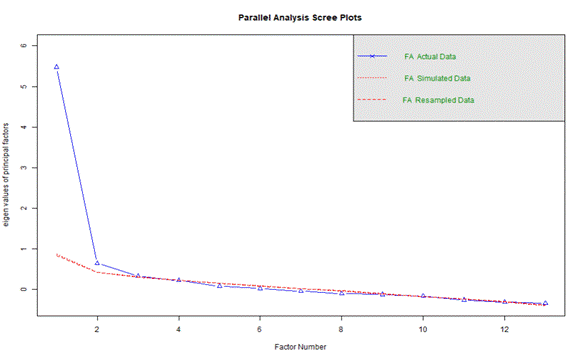
Figure 1. Parallel Analysis
|
Table 4. Exploratory Factor Analysis |
||||
|
Item |
F1 |
F2 |
h2 |
u2 |
|
2 |
0.43 |
0.39 |
0.33 |
0.67 |
|
3 |
0.43 |
|
0.19 |
0.81 |
|
4 |
0.73 |
|
0.58 |
0.42 |
|
5 |
0.68 |
0.38 |
0.61 |
0.39 |
|
6 |
0.68 |
0.39 |
0.62 |
0.38 |
|
7 |
0.40 |
0.46 |
0.37 |
0.63 |
|
9 |
0.61 |
|
0.41 |
0.59 |
|
10 |
0.51 |
|
0.32 |
0.68 |
|
12 |
0.42 |
0.44 |
0.36 |
0.64 |
|
13 |
0.48 |
0.63 |
0.62 |
0.38 |
|
14 |
|
0.88 |
0.80 |
0.20 |
|
15 |
|
0.7 |
0.55 |
0.45 |
|
F1= Compulsive Work F2= Excessive Work |
||||
Validity Based on Internal Structure and Reliability
CFA was performed taking into account the previous EFA results (Table 2). The results were satisfactory, with the goodness-of-fit indices being: χ2 = 53.250, df = 26, p < .001 CFI = 0.96, TLI = 0.95, RMSEA = 0.05 (90% CI 0.04 - 0.07), SRMR = 0.04. Furthermore, the factorial loads obtained adequate magnitudes (λ > 0.50). The study results also demonstrate high reliability in the measures of excessive work and compulsive work, as reflected in the internal consistency coefficients α and ω. Specifically, for the excessive work dimension, the α and ω coefficients are 0.78 and 0.80, respectively; whereas for the compulsive work dimension, these coefficients are 0.82 in both cases. These findings corroborate the robustness and reliability of the scales used to measure both constructs (Zinbarg et al., 2005).
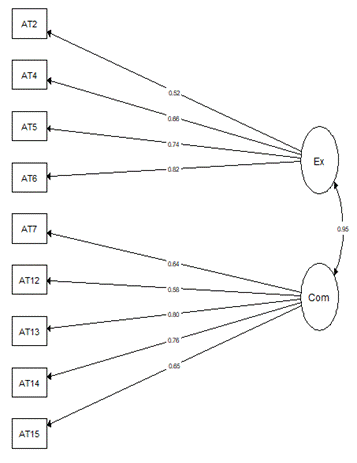
Figure 2. Confirmatory Factor Analysis
Discussion
In the modern era, characterized by technological advances and socioeconomic changes, work addiction has emerged as a growing problem. Unlike work engagement, work addiction has a compulsive nature, leading individuals to labor beyond healthy limits due to internal pressures. The consequences range from burnout to health issues and personal conflicts. Although various international tools exist to assess “workaholism,” there are discrepancies in their definitions and limitations in their application. Given Peru’s economic evolution and increased labor demand, having an appropriate tool for the Peruvian context is crucial. Therefore, this study proposes the development and validation of the Work Addiction Scale (WAS) specific to Peruvian workers, aiming to offer precise assessment and facilitate targeted interventions in the country.
Content validity is essential for any instrument, as it ensures that the instrument truly measures what it is intended to measure (Brown, 2015). In our study, the WAS demonstrated excellent content validity, suggesting its items are representative of the work addiction construct. These findings may be related to the multidimensional nature of work addiction.
The exploratory factor analysis (EFA) of the Work Addiction Scale (WAS) identified two main dimensions of work addiction, echoing previous research. Work addiction can manifest in both excessive work behaviors and compulsive patterns (Castañeda & García de Alba, 2011; Del Líbano et al., 2006; Salanova et al., 2008; Snir & Harpaz, 2012). Despite similarities between our findings and prior literature, some subtle differences also emerged. For instance, Porter (1996) had previously conceptualized work addiction as a unidimensional construct. However, our research strongly supports the idea that work addiction is, in fact, a multidimensional phenomenon. Distinguishing between excessive work and compulsive work is crucial, as these two dimensions might have different implications and underlying mechanisms. At a neurobiological level, compulsive work may be related to brain circuits associated with compulsivity and reward, similar to other compulsive behaviors (Volkow & Morales, 2015). In contrast, excessive work might be more associated with sociocultural factors or external pressures that drive individuals to work beyond their limits (Schaufeli et al., 2008). Moreover, these two components of work addiction could have different consequences for mental and physical health. For example, while excessive work might be directly linked to burnout and physical health issues due to lack of rest, compulsive work could be more tied to anxiety disorders and the inability to disconnect from work even during leisure time (Taris et al., 2010). In this sense, the EFA of the WAS identified that certain items did not align adequately with the proposed dimensions, showing possible cross-factorial loads and ambiguity in their interpretation. Therefore, items like “Even during my leisure time, I feel the need to be busy with something work-related,” “I feel that work is a way to escape from my personal problems,” and “I feel guilty when I am not working on something” were eliminated. This refinement is essential to improve the precision and coherence of the WAS, ensuring it efficiently captures the Excessive Work and Compulsive Work dimensions, and reflecting the relevance of continually updating and refining psychological assessment tools to address the phenomenon of work addiction.
Furthermore, with the results from the EFA, a confirmatory factor analysis (CFA) conducted for the WAS provided substantial information about its two main dimensions. In this case, the bidimensional structure of the WAS proposed by Excessive Work and Compulsive Work was tested through CFA. The results of our CFA suggest an adequate fit of the two-factor model with the collected data. This is essential, as a good fit indicates that the proposed model adequately reflects the relationships among the observed variables. Various fit indices support the suitability of the model. The fact that all factorial loads were greater than 0.50 underscores the significant contribution of each item to its underlying factor, further supporting the validity of the items.
The reliability of a scale is an indicator of how consistently it measures a construct, referring to the consistency and accuracy of the obtained scores. Cronbach’s alpha coefficient (α) and omega coefficient (ω) are two metrics that reflect this reliability. In this case, both coefficients, for both the excessive work and compulsive work dimensions, exceed the generally accepted threshold of 0.70, indicating excellent reliability. Specifically, the excessive work dimension has α and ω coefficients of 0.78 and 0.80, respectively, while the compulsive work dimension presents coefficients of 0.82 in both cases. The similarity in α and ω values, particularly in the compulsive work dimension, highlights the robustness and reliability of the WAS. The WAS proves to be a robust and reliable instrument for measuring the construct of work addiction.
Implications
The study on work addiction presented yields findings that have profound implications. For human resource professionals and team leaders, this finding suggests the need for more robust wellness policies, fostering health and balance between work and personal life. Professionals should be aware of the risks associated with a lack of social interaction, as it can lead to feelings of isolation, burnout, and decreased collaboration in the workplace. Decision-makers should consider these two dimensions when formulating policies that address work addiction. In this sense, to combat “excessive work,” organizations might consider implementing strict work hour limits or disconnection policies. Conversely, “compulsive work” might require more mental health-focused interventions, such as counseling or mental wellness programs. These findings reflect the complexity of the work addiction phenomenon and underscore the importance of addressing it at both the professional and organizational levels. As the lines between work and personal life continue to blur, especially in the post-pandemic era, it is crucial for organizations, professionals, and theorists to be equipped with the necessary information and tools to ensure workers’ health, well-being, and productivity.
Limitations
Firstly, the tool used to assess work addiction, despite its robustness in terms of validity and reliability, is based on self-assessment. Future research could benefit from using more objective measures or incorporating multiple informant evaluations, such as colleagues or supervisors. Secondly, the study’s sample could have influenced the findings. No information is provided on how the sample was selected or if there are specific characteristics that make it unique. Future research is advised to expand the participant base for a broader understanding of work addiction across various contexts and populations. Finally, it is important to acknowledge that the study’s design was cross-sectional, limiting our ability to make causal inferences between variables. Longitudinal or experimental studies in the future could provide a deeper understanding of the causes and effects related to work addiction and how it develops and changes over time.
Conclusion
The present study has provided solid and valuable evidence on the validity and reliability of a scale to measure work addiction. Through rigorous evaluation, items that did not meet optimal criteria were identified and adjusted, thus optimizing the quality of the instrument. These findings are crucial, as a valid and reliable measurement instrument is fundamental for the advancement of research in any domain.
Conflict of Interest
The authors declare that the research was conducted in the absence of any commercial or financial relationships that could be construed as a potential conflict of interest.
Author Contributions
JAP and SA-O participated in the conceptualization of the idea. JAP was in charge of the methodology and software. For validation, formal analysis, and research, SA-O and JAP. Data curation and resources were commissioned by JAP and SA-O. The writing of the first draft, review and editing, visualization and supervision were carried out by JAP. All authors have read and approved the final version of the manuscript.
Reference
Andreassen, C. S. (2014). Workaholism: An overview and current status of the research. In Journal of Behavioral Addictions (Vol. 3, Issue 1). https://doi.org/10.1556/JBA.2.2013.017
Andreassen, C. S., Griffiths, M. D., Hetland, J., & Pallesen, S. (2012). Development of a work addiction scale. Scandinavian Journal of Psychology, 53(3), 265–272. https://doi.org/10.1111/J.1467-9450.2012.00947.X
Ato, M., López, J., & Benavente, A. (2013). Un sistema de clasificación de los diseños de investigación en psicología. Anales de Psicología, 29(3), 1038–1059. https://doi.org/10.6018/analesps.29.3.178511
BBC, M. (2018). Los países del mundo en los que se trabaja más horas (y los dos primeros son de América Latina). British Broadcasting Corporation.
Brown, T. A. (2015). Confirmatory factor analysis for applied research (2nd ed.). Guilford Press.
Cabarcos, A. (2018). Adicción al trabajo y salud laboral: Causas y repercusiones sobre el trabajador. Universidade da Coruña.
Castañeda, E., & García de Alba, J. (2011). Perspectivas actuales de la adicción al trabajo. Psicología y Salud, 21(1), 131–139.
Clark, M. A., Smith, R. W., & Haynes, N. J. (2020). The Multidimensional Workaholism Scale: Linking the conceptualization and measurement of workaholism. Journal of Applied Psychology, 105(11). https://doi.org/10.1037/apl0000484
Del Líbano, M., Llorens, S., Schaufeli, W., & Salanova, M. (2006). Adicción al trabajo: concepto y evaluación (I). Gestión Práctica de Riesgos Laborales, 27, 24–30.
Escurra Mayaute, L. M. (1988). Cuantificación de la validez de contenido por criterio de jueces. Revista de Psicología, 6(1–2), 103–111.
Ferrando, P. J., & Anguiano-Carrasco, C. (2010). El análisis factorial como técnica de investigación en psicología. Papeles Del Psicologo, 31(1).
Fleming, J. S., & Merino Soto, C. (2005). Medidas de simplicidad y de ajuste factorial: un enfoque para la evaluación de escalas construidas factorialmente. Revista de Psicología, 23(2). https://doi.org/10.18800/psico.200502.002
Flowers, C. P., & Robinson, B. (2002). A structural and discriminant analysis of the work addiction risk test. In Educational and Psychological Measurement (Vol. 62, Issue 3). https://doi.org/10.1177/00164402062003008
García, N. (2018). Jornadas laborales en países de la OCDE y América Latina. Biblioteca Del Congreso Nacional de Chile BCM.
Hancock, G. R., & Mueller, R. O. (2001). Rethinking Construct Reliability within Latent Variable Systems. In R. Cudeck, S. D. Toit, & D. Soerbom (Eds.), Structural Equation Modeling: Present and Future—A Festschrift in Honor of Karl Joreskog (pp. 195–216). Scientific Software International.
INEI. (2022). Población ocupada del país alcanzó los 17 millones 120 mil personas en el año 2021.
Kaiser, H. F. (2016). The Application of Electronic Computers to Factor Analysis: Educational and Psychological Measurement, 20(1), 141–151. https://doi.org/10.1177/001316446002000116
Kline, R. B. (2016). Principles and practice of structural equation modeling (Cuarta Ed.). Guilford Press.
Morkevičiūtė, M., & Endriulaitienė, A. (2023). The Role of an Individual and a Situation in Explaining Work Addiction: Disclosing Complex Relations. International Journal of Environmental Research and Public Health, 20(5). https://doi.org/10.3390/ijerph20054560
Moyer, F., Azis, S., & Wuensch, K. (2017). De la adicción al trabajo al burnout: el capital psicológico como mediador. International Journal of Workplace Health Management, 10, 213–227.
Muthen, L., & Muthen, B. (2017). MPlus user’ guide (8th ed.).
Pérez, E. R., & Medrano, L. (2010). Análisis factorial exploratorio : Bases conceptuales y metodológicas. Revista Argentina de Ciencias Del Comportamiento, 2(1), 58–66.
Porras, N., & Parra, L. (2018). La adicción al trabajo como síntoma del malestar laboral contemporáneo. Revista Científica y Profesional de La Asociación Latinoamericana Para La Formación y La Enseñanza de La Psicología – ALFEPSI., 6, 4–14.
Porter, G. (1996). Organizational impact of workaholism: suggestions for researching the negative outcomes of excessive work. Journal of Occupational Health Psychology, 1(1). https://doi.org/10.1037/1076-8998.1.1.70
Quinones, C., & Griffiths, M. (2015). Addiction to Work: A Critical Review of the Workaholism Construct and Recommendations for Assessment. Journal of Psychosocial Nursing and Mental Health Services., 48–59.
Robinson, B. E. (1989). Workaholism: Hidden Legacies of Adult Children. Health Communications: Deerfield Beach.
Robinson, B. E., & Post, P. (1994). Validity of the Work Addiction Risk Test. Perceptual and Motor Skills, 78(1). https://doi.org/10.2466/pms.1994.78.1.337
Salanova, M., Líbano, M., Llorens, S., & Schaufeli, W. B. (2008). La adicción al trabajo. Notas Técnicas de Prevención.
Salas, E., & Copez, A. (2018). ¡ Necesito seguir trabajando ! Una revisión conceptual sobre la adicción al trabajo. Asociación de Docentes de La Universidad de San Martín de Porres., 32, 331–352. https://doi.org/al sobre la adicción al trabajo https://doi.org/10.24265/cultura.2018.v32.15
Schaufeli, W. B., Taris, T. W., & Bakker, A. B. (2008). It takes two to tango: Workaholism is working excessively and working compulsively. In The long work hours culture. Causes, consequences and choices.
Schumacker, R. E., & Lomax, R. G. (2016). A Beginner´s Guide to Structural Equation Modeling (4th ed.). Taylor & Francis.
Sícoli, C. P. (2016). Book review: Peru: Staying the course of economic success. In The American Economist (Vol. 62, Issue 1). https://doi.org/https://doi.org/10.1177/0569434516672758
Snir, R., & Harpaz, I. (2012). Beyond workaholism: Towards a general model of heavy work investment. Human Resource Management Review, 22(3). https://doi.org/10.1016/j.hrmr.2011.11.011
Soper, D. (2023). A-priori Sample Size Calculator for structural equation models. Software.
Sussman, S. (2012). Workaholism: A Review. Journal of Addiction, 1–20. https://doi.org/10.4172/2155-6105.S6-001.Workaholism
Taris, T. W., Schaufeli, W. B., & Shimazu, A. (2010). The push and pull of work: The differences between workaholism and work engagement. In Work Engagement: A Handbook of Essential Theory and Research.
VandenBos, G. R., & American Psychological Association. (2015). APA dictionary of Psychology (G. R. VandenBos & A. P. Association (eds.); 2nd ed.). American Psychological Association.
Volkow, N. D., & Morales, M. (2015). The Brain on Drugs: From Reward to Addiction. In Cell (Vol. 162, Issue 4). https://doi.org/10.1016/j.cell.2015.07.046
Worthington, R. L., & Whittaker, T. A. (2016). Scale Development Research: A Content Analysis and Recommendations for Best Practices. The Counseling Psychologist, 34(6), 806–838. https://doi.org/10.1177/0011000006288127
Zinbarg, R. E., Revelle, W., Yovel, I., & Li, W. (2005). Cronbach’s α, Revelle’s β, and Mcdonald’s ω H : their relations with each other and two alternative conceptualizations of reliability. Psychometrika 2005 70:1, 70(1), 123–133. https://doi.org/10.1007/S11336-003-0974-7