ORIGINAL
Needs and Uncertainty of Families of Hospitalized Patients as Predictors of Satisfaction with the Care Received
Kennedy T. Lozano-Huari1* *
1Unidad de Salud Pública, Escuela de Posgrado, Universidad Peruana Unión. Lima, Perú
Citation
Lozano-Huari, K. T. (2024). Needs and Uncertainty of Families of Hospitalized Patients as Predictors of Satisfaction with the Care Received. Interdisciplinary Advances in Health, 1, 5. https://doi.org/10.69653/iah20235
Submitted: 12-06-2023
Accepted: 19-12-2023
Published: 20-12-2023
*Correspondence:
Escuela de Posgrado, Universidad Peruana Unión, Km 19, Carretera Central, Lima 15033, Lima, Peru. ruana Unión, Km 19, Carretera Central, Lima 15033, Lima, Perú.
Abstract
Background: Patient and family satisfaction in a hospital context has become a critical indicator of the quality of medical care. Objective: The study aims to analyze the needs and uncertainties of family members of hospitalized patients as predictors of satisfaction with the care received.
Methods: A cross-sectional and explanatory design with latent variables was used. Instruments included the “Intensive Care Patient Family Needs” questionnaire, “Satisfaction with the care received”, and “Uncertainty in Illness in Companions”.
Results: The sample consisted of 350 family members of hospitalized patients. Analyses revealed that satisfaction with the care received positively correlates with the needs of the family members (β = 0.45, p < .001) and negatively with uncertainty in illness (β = -0.51, p < .05).
Conclusions: The findings suggest that meeting the needs of family members can significantly improve their satisfaction with the care received, while reducing uncertainty can have a similarly positive effect. The implementation of training programs in communication and empathy for health professionals is recommended, as well as the review of policies to ensure more holistic and humanized care.
Keywords:
Patient-Centered Care, Family Needs, Illness Uncertainty, Healthcare Satisfaction, Holistic Approach.
Introduction
Healthcare, in its essence, is an intrinsically human process that transcends the individual patient, encompassing their family and social environment (Jennings et al., 2016; Salvador-Carulla et al., 2014). In the contemporary context of medicine, patient and family satisfaction emerges not only as a reflection of the effectiveness of medical treatments but also as a barometer of the emotional and psychological experiences these individuals undergo (Auerbach et al., 2005). This multifaceted perception of medical care has led researchers and professionals to consider additional factors, such as uncertainty about the illness and family needs, as crucial elements that can influence satisfaction with the care received (Frivold et al., 2018).
Uncertainty in illness, defined by de Souza et al. (2023) as the inability to determine the meaning of illness-related events, can be a source of anxiety and stress for both patients and their families. Similarly, the needs of family members, ranging from seeking information to emotional support and involvement in decision-making, if not adequately addressed, can negatively impact the perception of care quality (Babaei & Abolhasani, 2020; Kwame & Petrucka, 2021).
Globally, the World Health Organization (WHO) estimates that 70% of complaints in healthcare services stem from inadequate communication and failure to address the emotional and psychological needs of patients and their families (WHO, 2021). This statistic is corroborated nationally by the Ministry of Health, which reports that approximately 60% of hospital complaints are related to perceived insensitive or depersonalized care (Pérez et al., 2009; Alamo-Palomino et al., 2020).
Despite growing awareness of the importance of patient and family experience (Alemu et al., 2021), significant gaps exist in the scientific literature. While some studies have examined the relationship between patient satisfaction and care quality, few have investigated how family needs and uncertainty about the illness in companions influence this satisfaction (Baumbach et al., 2023). This research gap underscores the need for deeper analysis, especially considering that patient and family satisfaction is not only an indicator of care quality but also related to better clinical outcomes, greater treatment adherence, and lower risk of medical litigation (Calabro et al., 2018; Cleary & McNeil, 1988).
This study aims to fill this gap by focusing on family needs and uncertainty about the illness in companions as predictors of satisfaction with the care received (De Beer & Brysiewicz, 2016). Our preliminary findings suggest a negative relationship between family needs and uncertainty about the illness (Arias-Rojas et al., 2020), implying that adequately addressing these needs can reduce uncertainty and improve the care experience (Arias-Rojas et al., 2019; Yan & Luo, 2022). This relationship, and its impact on satisfaction with the care received, is the core of our research.
In a world where healthcare is increasingly becoming patient-centered, it is imperative that health systems recognize and address the needs and concerns of family members and companions (Kwame & Petrucka, 2021; Pilnick, 2022). Doing so will not only improve patient satisfaction but also strengthen the relationship between the patient, their family, and the healthcare system, leading to more holistic and humanized care (Alharbi et al., 2023).
The primary objective of this study is to analyze family needs and uncertainty about the illness in companions as predictors of satisfaction with the care received (Karlsson et al., 2011). By doing so, we hope to shed light on how these often-overlooked factors can influence the perception of care quality and, therefore, clinical outcomes and the relationship between the patient, their family, and the healthcare system (Isaac et al., 2010).
Literature Review
Family Needs
Healthcare, at its core, not only focuses on the individual patient but also encompasses the complex interactions and needs of those surrounding the patient, particularly their family members (Engle et al., 2021; Schulz et al., 2016). According to Hickman & Douglas (2010), these family needs manifest as emotional, informational, psychological, and practical demands that arise in response to a loved one’s illness or need for medical care. These demands, although varying based on multiple factors such as the nature of the illness or the relationship with the patient, often converge in key areas: seeking information, emotional support, involvement in decision-making, and coordination of care (Schuttner et al., 2022).
The inherent uncertainty and challenge of illness can trigger a cascade of emotions in family members, ranging from anxiety and fear to sadness and anger (Harlan et al., 2020). In this tumultuous sea of emotions, seeking information becomes an anchor, allowing family members to understand the illness, anticipate the course of treatment, and prepare for the future (Glajchen et al., 2022; Toguri et al., 2020). However, information alone is not enough. Emotional support, whether provided by healthcare professionals, support groups, or social networks, is essential in helping family members process and manage their emotions (Cates et al., 2018). Additionally, active participation in decision-making empowers family members, allowing them to feel more in control of a situation that often seems chaotic and overwhelming (Opsomer et al., 2020).
Beyond decision-making, family members often take on the role of care coordinators, a task that involves managing appointments, communicating with various healthcare professionals, and ensuring that the patient receives appropriate care (Cady & Belew, 2017). This coordination, though essential, can be an additional source of stress if family needs are not adequately addressed, which can negatively affect not only their well-being but also the patient’s recovery and well-being (Schulz & Sherwood, 2008).
Da Costa et al. (2020) have emphasized that family satisfaction with the care received is intrinsically linked to patient satisfaction. A family member who feels their needs have been met and who has been included in the care process is more likely to report higher satisfaction with the care received (Karaca & Durna, 2019). However, neglect in this area can have adverse consequences, including a negative perception of care quality and potential decrease in patient treatment adherence (Doyle et al., 2013).
Uncertainty About the Illness in Companions
Uncertainty in the context of illness, as defined by Peters et al. (2017), manifests as the inability to discern the meaning of illness-related events, leading to feelings of anxiety, stress, and a perceived loss of control (Etkind et al., 2017). This uncertainty is especially palpable among the companions or family members of patients, who, in their quest for clarity, often face challenges arising from a lack of coherent information about the diagnosis, treatment, prognosis, and long-term consequences of the illness (Meyer et al., 2021). Additionally, the ambiguity in the role these companions should play and the expectations regarding their involvement in the care process can further exacerbate this uncertainty (Dhawale et al., 2017).
This uncertainty can manifest at various stages of the illness and care process (Leykum et al., 2014). Minton et al. (2020) identify that it can arise due to conflicting information, lack of clarity in medical communication, unexpected changes in the patient’s condition, or unforeseen events during treatment. Specifically, conflicting information, where companions receive divergent data from multiple sources, can intensify confusion and uncertainty (Alhussaini, 2021). Furthermore, medical communication, if not presented clearly and comprehensibly, can leave companions feeling disoriented and increase their level of uncertainty (Hannawa et al., 2022). Unexpected changes in the patient’s condition, whether complications or relapses, as well as unforeseen events during treatment, such as unanticipated side effects or suboptimal outcomes, can generate additional doubts and concerns (“Disclosure and Discussion of Adverse Events,” 2012; Molina‐mula & Gallo‐estrada, 2020).
The impact of this uncertainty on the emotional and psychological well-being of companions is profound (Morriss et al., 2022). It can trigger a range of emotional responses, from anxiety and depression to stress and burnout (Estlein et al., 2022). This uncertainty can also compromise companions’ ability to make informed decisions and effectively support the patient (George & Lowe, 2019). Moreover, how companions manage this uncertainty can have ramifications on their relationship with the patient and healthcare professionals (Prip et al., 2018). For instance, they may become more protective, controlling, or even distant, altering the relationship dynamics and potentially affecting the quality of care (Moudatsou et al., 2020).
Satisfaction with the Care Received
Satisfaction with care received in healthcare is a multidimensional construct that encompasses patients’ and their families’ perceptions and evaluations of the quality and effectiveness of the health services provided (Sixma et al., 1998). This perception is not limited to technical and clinical competence but also includes interpersonal aspects, such as communication, empathy, and respect shown by healthcare professionals (Moudatsou et al., 2020). Cleary & McNeil (1988) emphasize that satisfaction is an essential indicator of care quality, with implications for treatment adherence, patient recovery, and the dynamics between the patient, their family, and the healthcare system.
Various interrelated factors influence this perception of satisfaction (Udonwa & Ogbonna, 2012). Aljarallah et al. (2023) highlight that the prior expectations of patients and their families can set a benchmark for their level of satisfaction. If healthcare services meet or exceed these expectations, higher satisfaction is likely to be reported (Bostan et al., 2007). The quality of communication is another fundamental pillar (King & Hoppe, 2013). Lang (2012) emphasizes that clear, understandable, and empathetic communication is essential for satisfaction, as it allows patients and families to feel heard and better understand the diagnosis, treatment, and prognosis. Additionally, the perception of technical competence and the quality of care provided are crucial for satisfaction (Ng & Luk, 2019). However, beyond technical competence, interpersonal aspects such as empathy, respect, and courtesy also play a determining role in satisfaction (Mirzaei Maghsud et al., 2020). Olejarczyk & Young (2021) argue that patients and their families value being treated as individuals and not merely as clinical cases.
The role of family members or companions in this context is especially relevant (Andrades et al., 2013). They act as advocates and caregivers for the patient, and their perception of care can significantly impact their relationship with the healthcare system and the patient’s treatment adherence (Schulz & Eden, 2016). Vahdat et al. (2014) note that satisfied family members are more likely to follow medical recommendations, establish a positive relationship with healthcare professionals, and actively participate in patient care. However, dissatisfaction can have negative consequences, such as distrust, lack of treatment adherence, and, in extreme cases, medical litigation (Oguro et al., 2021; Tiwary et al., 2019).
Given these arguments, the following hypotheses are proposed (Figure 1):
· H1: There is a positive relationship between family needs and satisfaction with the care received.
· H2: There is a negative relationship between uncertainty about the illness in companions and satisfaction with the care received.
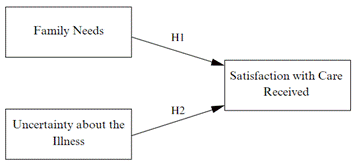
Figure 1. Theoretical model
Methods
Design and Participants
A cross-sectional and explanatory study was designed considering latent variables represented by a system of structural equations (Ato et al., 2013). The sample size was evaluated using the effect size through Soper’s electronic calculator (Soper, 2023), which considers the number of observed and latent variables in the structural equation model (SEM), the anticipated effect size (λ = 0.2), the desired statistical significance (α = 0.05), and the statistical power level (1 - β = 0.90). This indicated a minimum sample of 199 participants. The sample was selected using non-probabilistic sampling. The mean age was M = 34.50 years (SD = 11.26) ranging from 18 to 71 years. Table 1 presents the sociodemographic information of the participants. Of the total sample, 55.7% were male and 44.3% female. In terms of education, the majority had university studies (35.7%), and 76.6% of the participants were employed. Regarding the relationship with the hospitalized patient, the largest proportion were mothers (24.9%), and most family members had been with their hospitalized loved ones for 4-6 days, representing 64.80% of the sample. The most frequent hospital service was Internal Medicine, with 39.4%. Finally, regarding the time elapsed since the last information received, 48.0% of the participants indicated a lapse of 6-12 hours.
Procedure
The study was conducted under strict ethical and methodological protocols to ensure the integrity and confidentiality of the collected information. Initially, the project received approval from the Ethics Committee of a Peruvian University, under the code 2022-CEUPeU-026, ensuring that the proposed procedures were in line with national and international ethical standards.
Before data collection, a protocol was established based on the Declaration of Helsinki, which governs research involving human subjects. This declaration emphasizes the need to ensure privacy, confidentiality, and respect for participants in any research. Following these guidelines, a questionnaire was designed to be administered online via Google Forms to facilitate access and participation from the families of hospitalized patients.
The data collection period was set between September 2 and December 30, 2022. During this time, the families of hospitalized patients were invited to participate in the study. Detailed information about the research objective, the nature of the questions, the estimated time to complete the questionnaire, and assurances of confidentiality and anonymity was provided. It is crucial to highlight that participation in the study was entirely voluntary.
Before accessing the questionnaire, participants were presented with an informed consent document. This document explained in detail the purpose of the study, the procedures involved, potential risks and benefits, and reiterated their right to withdraw at any time without consequences. Only after reading and accepting this consent could participants access and respond to the questionnaire.
Instruments
Family Needs: The “Critical Care Family Needs Inventory (CCFNI)” questionnaire created by Harvey and Lent (1994) in California, and translated and validated by Gómez et al. (2011) in Spain, was used. The instrument comprises 11 items divided into 4 dimensions: medical care (items 1, 2, 9), communication (items 3, 4, 5), personal care (items 6, 7, 8), and potential improvements (items 10, 11). It features a Likert-type response scale with four alternatives: almost always (1), most of the time (2), sometimes (3), and never (4). For the final scoring, the degree of need is grouped into low (11-22 points) and high (23-44 points).
Satisfaction with Care Received: The “Patient Satisfaction Questionnaire Short Form (PSQ-18)” created by Marshall and Hays (1994) in the United States and validated in Peru by Canchero et al. (2019) with a Cronbach’s alpha reliability of 0.9, was used. It consists of 18 items divided into 7 dimensions: general satisfaction (items 3, 17), technical quality (items 2, 4, 6, 14), interpersonal manner (items 10, 11), communication (items 1, 13), financial aspects (items 5, 7), time spent with doctor (items 12, 15), and accessibility and convenience (items 8, 9, 16, 18). The Likert-type response scale ranges from strongly disagree (1) to strongly agree (5). For final scoring, items 1, 2, 3, 5, 6, 11, 15, and 18 are considered reverse questions. Results are presented based on the arithmetic mean and standard deviation, with values closer to 0 indicating dissatisfaction and values closer to 100 indicating satisfaction.
|
Table 1. Sociodemographic Information |
|||
|
Characteristics |
|
n |
% |
|
Gender |
Female |
155 |
44.3 |
|
Male |
195 |
55.7 |
|
|
Level of education |
Primary |
41 |
11.7 |
|
Secondary |
79 |
22.6 |
|
|
No studies |
3 |
0.9 |
|
|
Technical |
102 |
29.1 |
|
|
University |
125 |
35.7 |
|
|
Employed |
No |
82 |
23.4 |
|
Yes |
268 |
76.6 |
|
|
Relationship to the hospitalized patient |
Friend |
50 |
14.3 |
|
Spouse |
74 |
21.1 |
|
|
Child |
52 |
14.9 |
|
|
Mother |
87 |
24.9 |
|
|
Other |
10 |
2.9 |
|
|
Father |
53 |
15.1 |
|
|
Uncle |
24 |
6.9 |
|
|
Days with hospitalized relative |
4-6 days |
227 |
64.8 |
|
7-9 days |
63 |
18.1 |
|
|
10-12 days |
29 |
8.3 |
|
|
13-15 days |
19 |
5.4 |
|
|
16-18 days |
8 |
2.3 |
|
|
19-21 days |
4 |
1.1 |
|
|
Hospital service |
General surgery |
63 |
18 |
|
Emergency |
8 |
2.3 |
|
|
Gynecology-obstetrics |
45 |
12.9 |
|
|
General medicine |
1 |
0.3 |
|
|
Internal medicine |
138 |
39.4 |
|
|
Neonatology |
37 |
10.6 |
|
|
Pediatrics |
50 |
14.3 |
|
|
ICU |
8 |
2.3 |
|
|
Time since last information |
0-3 hrs |
6 |
1.7 |
|
3-6 hrs |
24 |
6.9 |
|
|
6-12 hrs |
168 |
48 |
|
|
More than 12 hrs |
152 |
43.4 |
|
Uncertainty About the Illness in Companions: The uncertainty scale consists of 12 items, rated on a Likert scale from 1 (strongly disagree) to 5 (strongly agree). Reliability values obtained were good, with Cronbach’s alpha ranging from 0.912 to 0.938 and split-half reliability from 0.901 to 0.933 (Brito et al., 2018).
Statistical Analysis
The theoretical model of the study was analyzed using structural equation modeling with the MLR estimator, appropriate for numerical variables and robust to deviations from inferential normality (Muthen & Muthen, 2017). The fit was evaluated using the Comparative Fit Index (CFI), the Root Mean Square Error of Approximation (RMSEA), and the Standardized Root Mean Square Residual (SRMR). CFI and TLI values > 0.90 (Bentler, 1990), RMSEA < 0.080 (MacCallum et al., 1996), and SRMR < 0.080 (Browne & Cudeck, 1992) were used as benchmarks.
The software used was “R” version 4.1.2 with the “lavaan” package version 0.6-10 (Rosseel, 2012).
Results
Preliminary Analysis
Table 2 presents the descriptive statistics and correlations for the study variables. Satisfaction with the care received had the highest mean (M) at 51.21, while family needs showed a standard deviation (SD) of 4.11. Uncertainty about the illness registered a mean of 29.56 with a SD of 6.8. Regarding correlations, there was a positive and significant correlation between satisfaction with the care received and family needs (r = 0.40, p < .01). Conversely, satisfaction with the care received and uncertainty about the illness showed a negative and significant correlation (r = -0.50, p < .01). Additionally, a negative and significant correlation was found between family needs and uncertainty about the illness (r = -0.57, p < .01).
|
Table 2. Descriptive Statistics and Correlations for Study Variables |
|||||
|
Variable |
Mean (M) |
SD |
1 |
2 |
3 |
|
1. Satisfaction with Care Received |
51.21 |
4.06 |
- |
|
|
|
2. Family Needs |
31.58 |
4.11 |
0.40** |
- |
|
|
3. Uncertainty about the Illness |
29.56 |
6.8 |
-0.50** |
-0.57** |
- |
|
Note: ** indicates p < .01. |
|||||
Theoretical Model Analysis
The analysis of the theoretical model indicated an adequate fit, χ² = 1680.440, df = 763, p < .001, CFI = 0.94, TLI = 0.94, RMSEA = 0.06 (90% CI 0.05 - 0.06), SRMR = 0.08. This result confirms H1, indicating a positive influence of family needs on satisfaction with the care received (β = 0.45, p < .001), and H2, where uncertainty about the illness in companions negatively influences satisfaction with the care received (β = -0.51, p < .05).

Figure 1. Results of the Explanatory Structural Model
Discussion
The findings suggest a negative relationship between family needs and uncertainty about the illness, which has profound implications for patient-centered care and their environment (Kang et al., 2020; Wang et al., 2022). Uncertainty about the illness, as described by Zhang (2017), refers to the inability to determine the meaning of illness-related events. This uncertainty can generate anxiety and stress for both patients and their families (Kang et al., 2020). In contrast, family needs, as noted by Visvanathan et al. (2020), relate to the search for information, emotional support, and participation in decision-making (Saarinen et al., 2021). Our study supports the idea that by meeting these needs, uncertainty can be reduced. These findings align with previous research. For instance, Bombard et al. (2018) found that providing adequate information and support to family members can reduce uncertainty and improve the care experience (Kang et al., 2020). However, our study goes further by identifying a direct and negative relationship between these two variables. While op ‘t Hoog et al. (2020) also identified a negative relationship between family needs and uncertainty, their focus was more on the patient experience than on the families (Robinson et al., 2021). On the other hand, Coles et al. (2017) did not find a significant relationship between these two variables, suggesting that there may be contextual or methodological factors influencing the results (Mielke et al., 2022).
The underlying mechanism behind our findings may be related to the perception of control (Cobos et al., 2022). Uncertainty often arises from a lack of information or an insufficient understanding of the situation (Simpkin & Armstrong, 2019). By meeting the needs of family members, they are likely to feel a sense of control over the situation, which can reduce uncertainty (Kang et al., 2020). This sense of control can be crucial for improving overall satisfaction with the care received (Haave et al., 2021).
Our findings confirm Hypothesis 1, showing a positive relationship between family needs and satisfaction with the care received (Liang et al., 2021). These results are consistent with previous research highlighting the importance of addressing the emotional, informational, psychological, and practical needs of family members in the care process (Fakhry & Mohammed, 2022). Satisfaction with the care received is a key indicator of care quality and has direct implications for treatment adherence, patient recovery, and the relationship between the patient, their family, and the healthcare system (Bombard et al., 2018). By adequately addressing the needs of family members, they are more likely to report higher satisfaction with the care received, which can positively influence the patient’s well-being and recovery (Reinhard et al., 2008). The underlying mechanism explaining these findings may be related to the perception of being heard and valued in the care process (Schulz & Eden, 2016). Family members who feel their needs are recognized and addressed are more likely to feel involved and respected in the care process, which can increase their satisfaction (Krist et al., 2017). Comparing our results with previous research, we find similarities with the study by Martínez et al. (2019), which also found a positive relationship between family needs and satisfaction with the care received (Torres-Soto et al., 2022). However, our study delves deeper into the underlying mechanism, suggesting that the perception of being heard and valued is a key factor in this relationship (Freeman & Finley, 2012). On the other hand, we find some differences with the study by Gopalan & Pattusamy (2020), which did not find a significant relationship between these two variables. These differences may be due to methodological differences or differences in the populations studied.
Our results confirm Hypothesis 2, showing a negative relationship between uncertainty about the illness in companions and satisfaction with the care received (Politi et al., 2011). These findings are consistent with existing literature suggesting that uncertainty can generate anxiety, stress, and a sense of loss of control, which can negatively influence the perception of care quality (Ersoy et al., 2023; Meyer et al., 2021). The underlying mechanism behind these findings may be related to the human need for understanding and predictability (Herd et al., 2021). Uncertainty can arise from a lack of clear information about the diagnosis, treatment, prognosis, and long-term implications of the illness (Hofmann, 2023). This lack of clarity can make companions feel disoriented, affecting their perception of the care received (Houghton et al., 2016). Comparing our results with previous research, we find similarities with the study by Anderson et al. (1996), which also found a negative relationship between uncertainty and satisfaction with the care received (Meyer et al., 2021). However, our study goes further by focusing specifically on companions and their unique experience. On the other hand, we find some differences with the study by García et al. (2020), which suggested that uncertainty did not significantly impact satisfaction with the care received (Ogden et al., 2002). These differences may be due to differences in the populations studied or the methodologies used.
Implications
The findings of this study have profound implications for professional practice in healthcare. The identified relationship between family needs, uncertainty about the illness, and satisfaction with the care received underscores the importance of adopting a holistic approach to medical care. Healthcare professionals must be aware that medical care is not limited to treating an illness but also involves addressing the emotional and psychological concerns of patients and their families. Training in communication skills, empathy, and active listening should be a priority in medical education and ongoing training.
At the policy level, decision-makers must recognize the importance of focusing on the emotional and psychological needs of patients and their families. This involves allocating adequate resources for programs aimed at humanizing care and training healthcare professionals in communication skills. Additionally, patient care policies should be reviewed and adapted to ensure that family needs are adequately addressed and uncertainty about the illness is reduced.
From a theoretical perspective, this study contributes to the existing literature by establishing a link between family needs, uncertainty about the illness, and satisfaction with the care received. These findings suggest the need to review and expand existing theories on patient satisfaction to include the perspective of family members and companions. Furthermore, the importance of considering uncertainty as a key factor in the care experience is highlighted.
It is recommended to implement training programs focusing on communication skills, empathy, and active listening for healthcare professionals. Hospitals and clinics should establish protocols that actively involve family members in the care process, providing adequate information and emotional support. Longitudinal studies should be conducted to better understand the relationship between family needs, uncertainty, and satisfaction over time. Additionally, exploring these relationships in different cultural and socioeconomic contexts would be beneficial for gaining a broader understanding.
Limitations
When addressing the results of our study, it is essential to recognize and consider its inherent limitations. First, the cross-sectional nature of the research prevents establishing causal relationships between the studied variables. Although we have identified significant correlations, we cannot assert with certainty that one variable causes changes in another. Second, the study relied on self-reports, which may introduce social desirability bias. Participants, consciously or unconsciously, may have responded in a way they considered more socially acceptable rather than reflecting their true feelings or experiences. Additionally, our sample was geographically limited to a specific region, which could affect the generalizability of the results to broader populations or different cultural and socioeconomic contexts. Perceptions and experiences of family members and patients may vary based on cultural, economic, or regional factors not considered in this study. Lastly, although we controlled for various confounding variables, there is always the possibility that unobserved or unconsidered variables influenced the results. These omitted variables could offer alternative or complementary explanations to the relationships we identified.
Conclusion
Modern healthcare requires a holistic approach that not only focuses on treating the illness but also considers the emotional and psychological needs of patients and their companions. Neglecting these aspects can have negative consequences not only for the patient and their family but also for healthcare professionals and the system as a whole. Addressing these areas is essential to ensure quality and humanized care.
Conflict of Interest
The authors declare that the research was conducted in the absence of any commercial or financial relationships that could be construed as a potential conflict of interest.
References
Alamo-Palomino, I. J., Matzumura-Kasano, J. P., & Gutiérrez-Crespo, H. F. (2020). Reclamaciones de pacientes en el servicio de emergencia adultos de un hospital de tercer nivel de atención. Revista de La Facultad de Medicina Humana, 20(2). https://doi.org/10.25176/rfmh.v20i2.2916
Alemu, W., Girma, E., & Mulugeta, T. (2021). Patient awareness and role in attaining healthcare quality: A qualitative, exploratory study. International Journal of Africa Nursing Sciences, 14. https://doi.org/10.1016/j.ijans.2021.100278
Alharbi, H. F., Alzahrani, N. S., Almarwani, A. M., Asiri, S. A., & Alhowaymel, F. M. (2023). Patients’ satisfaction with nursing care quality and associated factors: A cross-section study. Nursing Open, 10(5). https://doi.org/10.1002/nop2.1577
Alhussaini, A. (2021). Improve Communicating Uncertainty in Intensive Care Unit With Patient and Family (ICU-PF). Cureus. https://doi.org/10.7759/cureus.20837
Aljarallah, N. A., Almuqbil, M., Alshehri, S., Khormi, A. M. S., AlReshaidan, R. M., Alomran, F. H., Fawzan Alomar, N., Alshahrani, F. F., Alshammari, M. S., Alsanie, W. F., Alhomrani, M., Alamri, A. S., & Asdaq, S. M. B. (2023). Satisfaction of patients with health care services in tertiary care facilities of Riyadh, Saudi Arabia: A cross-sectional approach. Frontiers in Public Health, 10. https://doi.org/10.3389/fpubh.2022.1077147
Andrades, M., Kausar, S., & Ambreen, A. (2013). Role and influence of the patient′s companion in family medicine consultations: “The patient′s perspective.” Journal of Family Medicine and Primary Care, 2(3). https://doi.org/10.4103/2249-4863.120767
Arias-Rojas, M., Carreño-Moreno, S., & Posada-López, C. (2019). Uncertainty in illness in family caregivers of palliative care patients and associated factors. Revista Latino-Americana de Enfermagem, 27. https://doi.org/10.1590/1518-8345.3185.3200
Arias-Rojas, M., Carreño-Moreno, S., & Rojas-Reyes, J. (2020). Uncertainty towards the disease of family caregivers of patients in palliative care: A scoping review. Aquichan, 20(3). https://doi.org/10.5294/aqui.2020.20.3.4
Ato, M., López, J. J., & Benavente, A. (2013). Un sistema de clasificación de los diseños de investigación en psicología. Anales de Psicologia, 29(3), 1038–1059. https://doi.org/10.6018/analesps.29.3.178511
Auerbach, S. M., Kiesler, D. J., Wartella, J., Rausch, S., Ward, K. R., & Ivatury, R. (2005). Optimism, satisfaction with needs met, interpersonal perceptions of the healthcare team, and emotional distress in patients’ family members during critical care hospitalization. American Journal of Critical Care, 14(3). https://doi.org/10.4037/ajcc2005.14.3.202
Babaei, S., & Abolhasani, S. (2020). Family’s Supportive Behaviors in the Care of the Patient Admitted to the Cardiac Care Unit: A Qualitative Study. Journal of Caring Sciences, 9(2). https://doi.org/10.34172/jcs.2020.012
Baumbach, L., Frese, M., Härter, M., König, H. H., & Hajek, A. (2023). Patients Satisfied with Care Report Better Quality of Life and Self-Rated Health—Cross-Sectional Findings Based on Hospital Quality Data. Healthcare (Switzerland), 11(5). https://doi.org/10.3390/healthcare11050775
Bentler, P. (1990). Comparative fit indices in structural models. Psychological Bulletin, 107(2), 238–246.
Bombard, Y., Baker, G. R., Orlando, E., Fancott, C., Bhatia, P., Casalino, S., Onate, K., Denis, J. L., & Pomey, M. P. (2018). Engaging patients to improve quality of care: A systematic review. In Implementation Science (Vol. 13, Issue 1). https://doi.org/10.1186/s13012-018-0784-z
Bostan, S., Acuner, T., & Yilmaz, G. (2007). Patient (customer) expectations in hospitals. Health Policy, 82(1). https://doi.org/10.1016/j.healthpol.2006.08.005
Brito, P. R. B., Tesouro, E. G., Gutiérrez, D. A. F., Hernández, A. M. G., Gutiérrez, R. F., & Putze, G. B. (2018). Validación de la escala de incertidumbre ante la enfermedad en pacientes y acompañantes que acuden a un servicio de urgencias. Revista Científica de La Sociedad Española de Medicina de Urgencias y Emergencias, 30(2), 105–114. https://www.researchgate.net/publication/323285410_Validacion_de_la_escala_de_incertidumbre_ante_la_enfermedad_en_pacientes_y_acompanantes_que_acuden_a_un_servicio_de_urgencias
Browne, M. W., & Cudeck, R. (1992). Alternative ways of assessing model fit. Sociological Methods & Research, 21(2), 230–258. https://doi.org/10.1177/0049124192021002005
Cady, R. G., & Belew, J. L. (2017). Parent perspective on care coordination services for their child with medical complexity. Children, 4(6). https://doi.org/10.3390/children4060045
Calabro, K. A., Raval, M. V., & Rothstein, D. H. (2018). Importance of patient and family satisfaction in perioperative care. Seminars in Pediatric Surgery, 27(2). https://doi.org/10.1053/j.sempedsurg.2018.02.009
Cates, D. S., Gomes, P. G., & Krasilovsky, A. M. (2018). Behavioral Health Support for Patients, Families, and Healthcare Workers. In Bioemergency Planning. https://doi.org/10.1007/978-3-319-77032-1_16
Cleary, P. D., & McNeil, B. J. (1988). Patient satisfaction as an indicator of quality care. In Inquiry (Vol. 25, Issue 1).
Cobos, P. L., Quintero, M. J., Ruiz-Fuentes, M., Vervliet, B., & López, F. J. (2022). The role of relief, perceived control, and prospective intolerance of uncertainty in excessive avoidance in uncertain-threat environments. International Journal of Psychophysiology, 179. https://doi.org/10.1016/j.ijpsycho.2022.07.002
Coles, E., Wells, M., Maxwell, M., Harris, F. M., Anderson, J., Gray, N. M., Milner, G., & MacGillivray, S. (2017). The influence of contextual factors on healthcare quality improvement initiatives: What works, for whom and in what setting? Protocol for a realist review. Systematic Reviews, 6(1). https://doi.org/10.1186/s13643-017-0566-8
da Costa, D. G., de Moura, G. M. S. S., Moraes, M. G., Dos Santos, J. L. G., & de Magalhães, A. M. M. (2020). Satisfaction attributes related to safety and quality perceived in the experience of hospitalized patients. Revista Gaucha de Enfermagem, 41(Special Issue). https://doi.org/10.1590/1983-1447.2020.20190152
De Beer, J., & Brysiewicz, P. (2016). The needs of family members of intensive care unit patients: A grounded theory study. Southern African Journal of Critical Care, 32(2). https://doi.org/10.7196/SAJCC.2016.v32i2.298
de Souza, L. M., Freitas, K. S., da Silva Filho, A. M., Brito Teixeira, J. R., Silveira Souza, G. S., Fontoura, E. G., Motta Coifman, A. H., & Portela, P. P. (2023). Prevalence and factors associated with symptoms of depression in family members of people hospitalized in the intensive care unit. Revista Brasileira de Terapia Intensiva, 34(4). https://doi.org/10.5935/0103-507X.20220080-en
Dhawale, T., Steuten, L. M., & Deeg, H. J. (2017). Uncertainty of Physicians and Patients in Medical Decision Making. In Biology of Blood and Marrow Transplantation (Vol. 23, Issue 6). https://doi.org/10.1016/j.bbmt.2017.03.013
Disclosure and discussion of adverse events. (2012). In Obstetrics and Gynecology (Vol. 119, Issue 3). https://doi.org/10.1097/AOG.0b013e31824e12f9
Doyle, C., Lennox, L., & Bell, D. (2013). A systematic review of evidence on the links between patient experience and clinical safety and effectiveness. In BMJ Open (Vol. 3, Issue 1). https://doi.org/10.1136/bmjopen-2012-001570
Engle, R. L., Mohr, D. C., Holmes, S. K., Seibert, M. N., Afable, M., Leyson, J., & Meterko, M. (2021). Evidence-based practice and patient-centered care: Doing both well. Health Care Management Review, 46(3). https://doi.org/10.1097/HMR.0000000000000254
Ersoy, A., Mahmood, Z., Sharif, S., Ersoy, N., & Ehtiyar, R. (2023). Exploring the Associations between Social Support, Perceived Uncertainty, Job Stress, and Emotional Exhaustion during the COVID-19 Crisis. Sustainability (Switzerland), 15(3). https://doi.org/10.3390/su15032150
Estlein, R., Segel-Karpas, D., & Elran-Barak, R. (2022). Relational uncertainty, interdependence and psychological distress during COVID-19: A longitudinal study. Stress and Health, 38(5). https://doi.org/10.1002/smi.3155
Etkind, S. N., Bristowe, K., Bailey, K., Selman, L. E., & Murtagh, F. E. M. (2017). How does uncertainty shape patient experience in advanced illness? A secondary analysis of qualitative data. Palliative Medicine, 31(2). https://doi.org/10.1177/0269216316647610
Fakhry, M., & Mohammed, W. E. (2022). Impact of family presence on healthcare outcomes and patients’ wards design. Alexandria Engineering Journal, 61(12). https://doi.org/10.1016/j.aej.2022.04.027
Freeman, V., & Finley, J. (2012). Building and Maintaining Healthy Relationships Across the Health Professions. American Journal of Clinical Pathology, 138(suppl 2). https://doi.org/10.1093/ajcp/138.suppl2.99
Frivold, G., Slettebø, Å., Heyland, D. K., & Dale, B. (2018). Family members’ satisfaction with care and decision-making in intensive care units and post-stay follow-up needs—a cross-sectional survey study. Nursing Open, 5(1). https://doi.org/10.1002/nop2.97
George, R. E., & Lowe, W. A. (2019). Well-being and uncertainty in health care practice. In Clinical Teacher (Vol. 16, Issue 4). https://doi.org/10.1111/tct.13051
Glajchen, M., Goehring, A., Johns, H., & Portenoy, R. K. (2022). Family Meetings in Palliative Care: Benefits and Barriers. In Current Treatment Options in Oncology (Vol. 23, Issue 5). https://doi.org/10.1007/s11864-022-00957-1
Gopalan, N., & Pattusamy, M. (2020). Role of work and family factors in predicting career satisfaction and life success. International Journal of Environmental Research and Public Health, 17(14). https://doi.org/10.3390/ijerph17145096
Haave, R. O., Bakke, H. H., & Schröder, A. (2021). Family satisfaction in the intensive care unit, a cross-sectional study from Norway. BMC Emergency Medicine, 21(1). https://doi.org/10.1186/s12873-021-00412-8
Hannawa, A. F., Wu, A. W., Kolyada, A., Potemkina, A., & Donaldson, L. J. (2022). The aspects of healthcare quality that are important to health professionals and patients: A qualitative study. Patient Education and Counseling, 105(6). https://doi.org/10.1016/j.pec.2021.10.016
Harlan, E. A., Miller, J., Costa, D. K., Fagerlin, A., Iwashyna, T. J., Chen, E. P., Lipman, K., & Valley, T. S. (2020). Emotional Experiences and Coping Strategies of Family Members of Critically Ill Patients. Chest, 158(4). https://doi.org/10.1016/j.chest.2020.05.535
Herd, S., Krueger, K., Nair, A., Mollick, J., & O’Reilly, R. (2021). Neural Mechanisms of Human Decision-Making. Cognitive, Affective and Behavioral Neuroscience, 21(1). https://doi.org/10.3758/s13415-020-00842-0
Hickman, R. L., & Douglas, S. L. (2010). Impact of chronic critical illness on the psychological outcomes of family members. AACN Advanced Critical Care, 21(1). https://doi.org/10.1097/NCI.0b013e3181c930a3
Hofmann, B. (2023). Temporal uncertainty in disease diagnosis. Medicine, Health Care and Philosophy. https://doi.org/10.1007/s11019-023-10154-y
Houghton, C., Murphy, K., Brooker, D., & Casey, D. (2016). Healthcare staffs’ experiences and perceptions of caring for people with dementia in the acute setting: Qualitative evidence synthesis. International Journal of Nursing Studies, 61. https://doi.org/10.1016/j.ijnurstu.2016.06.001
Isaac, T., Zaslavsky, A. M., Cleary, P. D., & Landon, B. E. (2010). The relationship between patients’ perception of care and measures of hospital quality and safety. Health Services Research, 45(4). https://doi.org/10.1111/j.1475-6773.2010.01122.x
Jennings, V., Yun, J., & Larson, L. (2016). Finding common ground: Environmental ethics, social justice, and a sustainable path for nature-based health promotion. Healthcare (Switzerland), 4(3). https://doi.org/10.3390/healthcare4030061
Kang, J., Cho, Y. J., & Choi, S. (2020). State anxiety, uncertainty in illness, and needs of family members of critically ill patients and their experiences with family-centered multidisciplinary rounds: A mixed model study. PLoS ONE, 15(6). https://doi.org/10.1371/journal.pone.0234296
Karaca, A., & Durna, Z. (2019). Patient satisfaction with the quality of nursing care. Nursing Open, 6(2), 535. https://doi.org/10.1002/NOP2.237
Karlsson, C., Tisell, A., Engström, Å., & Andershed, B. (2011). Family members’ satisfaction with critical care: A pilot study. Nursing in Critical Care, 16(1). https://doi.org/10.1111/j.1478-5153.2010.00388.x
King, A., & Hoppe, R. B. (2013). “Best Practice” for Patient-Centered Communication: A Narrative Review. Journal of Graduate Medical Education, 5(3). https://doi.org/10.4300/jgme-d-13-00072.1
Krist, A. H., Tong, S. T., Aycock, R. A., & Longo, D. R. (2017). Engaging Patients in Decision-Making and Behavior Change to Promote Prevention. Studies in Health Technology and Informatics, 240. https://doi.org/10.3233/978-1-61499-790-0-284
Kwame, A., & Petrucka, P. M. (2021). A literature-based study of patient-centered care and communication in nurse-patient interactions: barriers, facilitators, and the way forward. In BMC Nursing (Vol. 20, Issue 1). https://doi.org/10.1186/s12912-021-00684-2
Lang, E. V. (2012). A better patient experience through better communication. In Journal of Radiology Nursing (Vol. 31, Issue 4). https://doi.org/10.1016/j.jradnu.2012.08.001
Leykum, L. K., Lanham, H. J., Pugh, J. A., Parchman, M., Anderson, R. A., Crabtree, B. F., Nutting, P. A., Miller, W. L., Stange, K. C., & McDaniel, R. R. (2014). Manifestations and implications of uncertainty for improving healthcare systems: an analysis of observational and interventional studies grounded in complexity science. In Implementation science : IS (Vol. 9). https://doi.org/10.1186/s13012-014-0165-1
Liang, Y., Li, J., & Pan, W. (2021). Family satisfaction in the intensive care unit: The influence of disease severity, care relationship, patient anxiety and patient pain. Intensive and Critical Care Nursing, 63. https://doi.org/10.1016/j.iccn.2020.102995
MacCallum, R. C., Browne, M. W., & Sugawara, H. M. (1996). Power Analysis and determination of sample size for covariance structure modeling of fit involving a particular measure of model. Psychological Methods, 13(2), 130–149.
Meyer, A. N. D., Giardina, T. D., Khawaja, L., & Singh, H. (2021). Patient and clinician experiences of uncertainty in the diagnostic process: Current understanding and future directions. Patient Education and Counseling, 104(11). https://doi.org/10.1016/j.pec.2021.07.028
Mielke, J., Brunkert, T., Zúñiga, F., Simon, M., Zullig, L. L., & De Geest, S. (2022). Methodological approaches to study context in intervention implementation studies: an evidence gap map. BMC Medical Research Methodology, 22(1). https://doi.org/10.1186/s12874-022-01772-w
Minton, C., Batten, L., & Huntington, A. (2020). A qualitative multicase study of the trajectories of prolonged critical illness: Patient, family, and healthcare professionals’ experiences. Australian Critical Care, 33(5). https://doi.org/10.1016/j.aucc.2019.10.005
Mirzaei Maghsud, A., Abazari, F., Miri, S., & Sadat Nematollahi, M. (2020). The effectiveness of empathy training on the empathy skills of nurses working in intensive care units. Journal of Research in Nursing, 25(8). https://doi.org/10.1177/1744987120902827
Molina‐mula, J., & Gallo‐estrada, J. (2020). Impact of nurse‐patient relationship on quality of care and patient autonomy in decision‐making. International Journal of Environmental Research and Public Health, 17(3). https://doi.org/10.3390/ijerph17030835
Morriss, J., Tupitsa, E., Dodd, H. F., & Hirsch, C. R. (2022). Uncertainty Makes Me Emotional: Uncertainty as an Elicitor and Modulator of Emotional States. Frontiers in Psychology, 13. https://doi.org/10.3389/fpsyg.2022.777025
Moudatsou, M., Stavropoulou, A., Philalithis, A., & Koukouli, S. (2020). The role of empathy in health and social care professionals. In Healthcare (Switzerland) (Vol. 8, Issue 1). https://doi.org/10.3390/healthcare8010026
Muthen, L., & Muthen, B. (2017). MPlus user’ guide (8th ed.).
Ng, J. H. Y., & Luk, B. H. K. (2019). Patient satisfaction: Concept analysis in the healthcare context. Patient Education and Counseling, 102(4). https://doi.org/10.1016/j.pec.2018.11.013
Ogden, J., Fuks, K., Gardner, M., Johnson, S., McLean, M., Martin, P., & Shah, R. (2002). Doctors expressions of uncertainty and patient confidence. Patient Education and Counseling, 48(2). https://doi.org/10.1016/S0738-3991(02)00020-4
Oguro, N., Suzuki, R., Yajima, N., Sakurai, K., Wakita, T., Hall, M. A., & Kurita, N. (2021). The impact that family members’ health care experiences have on patients’ trust in physicians. BMC Health Services Research, 21(1). https://doi.org/10.1186/s12913-021-07172-y
Olejarczyk, J. P., & Young, M. (2021). Patient Rights And Ethics. The Journal of Law, Medicine & Ethics, 8(6).
op ‘t Hoog, S. A. J. J., Dautzenberg, M., Eskes, A. M., Vermeulen, H., & Vloet, L. C. M. (2020). The experiences and needs of relatives of intensive care unit patients during the transition from the intensive care unit to a general ward: A qualitative study. Australian Critical Care, 33(6). https://doi.org/10.1016/j.aucc.2020.01.004
Opsomer, S., De Lepeleire, J., Lauwerier, E., & Pype, P. (2020). Resilience in family caregivers of patients diagnosed with advanced cancer–unravelling the process of bouncing back from difficult experiences, a hermeneutic review. In European Journal of General Practice (Vol. 26, Issue 1). https://doi.org/10.1080/13814788.2020.1784876
Pérez, A. V., Pérez, L. A., Mayor, E. E., Corella, S. M., & Rodríguez, J. E. V. (2009). Análisis de las reclamaciones en atención primaria mediante el control estadístico de procesos. Revista de Calidad Asistencial, 24(4). https://doi.org/10.1016/s1134-282x(09)71799-3
Peters, A., McEwen, B. S., & Friston, K. (2017). Uncertainty and stress: Why it causes diseases and how it is mastered by the brain. In Progress in Neurobiology (Vol. 156). https://doi.org/10.1016/j.pneurobio.2017.05.004
Pilnick, A. (2022). What Is Patient Centred Care? In Reconsidering Patient Centred Care. https://doi.org/10.1108/978-1-80071-743-520221002
Politi, M. C., Clark, M. A., Ombao, H., Dizon, D., & Elwyn, G. (2011). Communicating uncertainty can lead to less decision satisfaction: A necessary cost of involving patients in shared decision making? Health Expectations, 14(1). https://doi.org/10.1111/j.1369-7625.2010.00626.x
Prip, A., Møller, K. A., Nielsen, D. L., Jarden, M., Olsen, M. H., & Danielsen, A. K. (2018). The Patient-Healthcare Professional Relationship and Communication in the Oncology Outpatient Setting: A Systematic Review. In Cancer Nursing (Vol. 41, Issue 5). https://doi.org/10.1097/NCC.0000000000000533
Reinhard, S. C., Given, B., Petlick, N. H., & Bemis, A. (2008). Supporting Family Caregivers in Providing Care. In Patient Safety and Quality: An Evidence-Based Handbook for Nurses.
Robinson, J., Pilbeam, C., Goodwin, H., Raphael, D., Waterworth, S., & Gott, M. (2021). The impact of uncertainty on bereaved family’s experiences of care at the end of life: a thematic analysis of free text survey data. BMC Palliative Care, 20(1). https://doi.org/10.1186/s12904-021-00748-9
Rosseel, Y. (2012). lavaan : An R Package for Structural Equation Modeling. Journal of Statistical Software, 48(2), 1–93. https://doi.org/10.18637/jss.v048.i02
Saarinen, J., Mishina, K., Soikkeli-Jalonen, A., & Haavisto, E. (2021). Family members’ participation in palliative inpatient care: An integrative review. In Scandinavian Journal of Caring Sciences. https://doi.org/10.1111/scs.13062
Salvador-Carulla, L., Lucas, R., Ayuso-Mateos, J. L., & Miret, M. (2014). Use of the terms “Wellbeing” and “Quality of Life” in health sciences: A conceptual framework. European Journal of Psychiatry, 28(1). https://doi.org/10.4321/S0213-61632014000100005
Schulz, R., & Eden, J. (2016). Family caregiving roles and impacts. In Families Caring for an Aging America.
Schulz, R., Eden, J., Adult, C. F. C. O., Serv, B. H. C., Div, H. M., & Med, N. A. S. E. (2016). Family caregivers’ interactions with health care and long-term services and supports. In Families Caring for an Aging America.
Schulz, R., & Sherwood, P. R. (2008). Physical and mental health effects of family caregiving. American Journal of Nursing, 108(9 SUPPL.). https://doi.org/10.1097/01.NAJ.0000336406.45248.4c
Schuttner, L., Hockett Sherlock, S., Simons, C., Ralston, J. D., Rosland, A. M., Nelson, K., Lee, J. R., & Sayre, G. (2022). Factors affecting primary care physician decision-making for patients with complex multimorbidity: a qualitative interview study. BMC Primary Care, 23(1). https://doi.org/10.1186/s12875-022-01633-x
Simpkin, A. L., & Armstrong, K. A. (2019). Communicating Uncertainty: a Narrative Review and Framework for Future Research. In Journal of General Internal Medicine (Vol. 34, Issue 11). https://doi.org/10.1007/s11606-019-04860-8
Sixma, H. J., Kerssens, J. J., Campen, C. van, & Peters, L. (1998). Quality of care from the patients’ perspective: from theoretical concept to a new measuring instrument. Health Expectations, 1(2). https://doi.org/10.1046/j.1369-6513.1998.00004.x
Soper, D. (2023). A-priori Sample Size Calculator for structural equation models. Software.
Tiwary, A., Rimal, A., Paudyal, B., Sigdel, K. R., & Basnyat, B. (2019). Poor communication by health care professionals may lead to life-threatening complications: Examples from two case reports [version 1; peer review: 2 approved]. Wellcome Open Research, 4. https://doi.org/10.12688/wellcomeopenres.15042.1
Toguri, J. T., Grant-Nunn, L., & Urquhart, R. (2020). Views of advanced cancer patients, families, and oncologists on initiating and engaging in advance care planning: A qualitative study. BMC Palliative Care, 19(1). https://doi.org/10.1186/s12904-020-00655-5
Torres-Soto, N. Y., Corral-Verdugo, V., & Corral-Frías, N. S. (2022). The relationship between self-care, positive family environment, and human wellbeing. Wellbeing, Space and Society, 3. https://doi.org/10.1016/j.wss.2022.100076
Udonwa, N. E., & Ogbonna, U. K. (2012). Patient-Related Factors Influencing Satisfaction in the Patient-Doctor Encounters at the General Outpatient Clinic of the University of Calabar Teaching Hospital, Calabar, Nigeria. International Journal of Family Medicine, 2012. https://doi.org/10.1155/2012/517027
Vahdat, S., Hamzehgardeshi, L., Hessam, S., & Hamzehgardeshi, Z. (2014). Patient involvement in health care decision making: A review. Iranian Red Crescent Medical Journal, 16(1). https://doi.org/10.5812/ircmj.12454
Visvanathan, A., Mead, G. E., Dennis, M., Whiteley, W. N., Doubal, F. N., & Lawton, J. (2020). The considerations, experiences and support needs of family members making treatment decisions for patients admitted with major stroke: A qualitative study. BMC Medical Informatics and Decision Making, 20(1). https://doi.org/10.1186/s12911-020-01137-7
Wang, J., Cui, J., Tu, S., Yang, R., & Zhao, L. (2022). Resilience and caregiving ability among caregivers of people with stroke: The mediating role of uncertainty in illness. Frontiers in Psychiatry, 13. https://doi.org/10.3389/fpsyt.2022.788737
WHO. (2021). Global patient safety action plan 2021–2030:Towards eliminating avoidable harm e health care. In World Health Organization.
Yan, J., & Luo, L. (2022). A Study on the Relationship between Sense of Disease Uncertainty and Family Strength and Mental Resilience in Guardians of Children with Inflammatory Bowel Disease. Emergency Medicine International, 2022. https://doi.org/10.1155/2022/4797281
Zhang, Y. (2017). Uncertainty in illness: Theory review, application, and extension. In Oncology Nursing Forum (Vol. 44, Issue 6). https://doi.org/10.1188/17.ONF.645-649